Short Article Vol. 3 No. 1 (2019): International J of Health Systems and Implementation Research
Improving Access to Safe Drinking Water Requires Leadership at Different Levels: A photo-essay from a Rural Area in Eastern India (Tangi-Odisha).
Safe Water & Leadership
Downloads
Topics
Keywords:
- Health Systems Strengthening
- Public Health Leadership
- Behaviour Change Communication
- Water Safety Plan
- household Water treatment & Safe storage
Abstract
Abstract: Water is a scarce resource. Often focus is on access and seldom on its safety. Leadership skills by people at multiple levels are required to ensure sustained access to safe drinking water. A group of medical students from All India Institute of Medical Sciences at Bhubaneswar used some of these skills to bring about a change in behaviour of few families with respect to household water treatment and safe storage practices. They were able to demonstrate skill transfer while making filters in an attempt to ensure self-reliance. Important lessons were learnt that could be useful for scaling up use of safe water practices in future. This public health exercise is about their journey in utilising collaborative leadership in being the change we wish to see in the world.
Full text
This web version was prepared from the published PDF, which is the version of record. Please cite and quote from the PDF.
Introduction
Access to safe-drinking water is crucial for promoting health and well-being, sustaining livelihoods, and creating resilient communities. Water is a scarce resource, its quality always under constant pressure by presence of infectious agents, toxic chemicals, and radiological hazards, a consequence of uncontrolled human activity. Poorest are usually the hardest hit, primarily due to inadequate access and inability to recover from its impact.
Sanitation and Hygiene are dependent on availability of adequate quantities of water. Hence, interventions dealing with all these are often referred to as WASH (Water, Sanitation, & Hygiene) Interventions. In low-middle income countries (LMIC), 58% of all cases of diarrhea could be attributed to inadequate drinking water (34%), sanitation (19%), and hygiene (20%).[1] In 2012, burden due to diarrhea in South-East Asia (attributable to inadequate water) amounted to 0.2 million deaths and 10.7 million disability adjusted life years (DALYs).[2] Worldwide in 2015, India reported highest number of deaths in children younger than 5 years. Diarrhea accounted for 21.3% of deaths in children between 1 month and 59 months of age during the same period.[3]
A number of cost-effective options for household water treatment and safe storage are available.[4] Filtering and safe storage of water from unimproved and improved source in particular, could reduce 45% and 38% of diarrhea morbidity respectively.[5] However, most of these interventions are still not being accessed by people. Leadership at different levels is required to improve access to safe drinking water. Leadership is multidimensional and includes systems thinking; political leadership; collaborative leadership; building and leading interdisciplinary teams; leadership & communications; leading change; emotional intelligence; and organizational learning.[6] Public health professionals at all levels need to master these skills to bring about a strategic change in resource constraint settings. Earlier research has shown that huge leadership gaps exist in India particularly Political leadership, leading change, communications, and systems thinking. [7] World bank has been doing phenomenal work in helping India manage its complex water resources. [8,9]
In this Public Health Exercise, we share our experiences about leadership exhibited by a group of Medical Students from All India Institute of Medical Sciences-Bhubaneswar (AIIMS-BBSR), in improving access to safe drinking water to small group of families in a remote village in eastern India as part of their community-based experiential learning activity.
Needs Assessment
Department of Community and Family Medicine at AIIMS BBSR has adopted Tangi block in Khurda District, as one of their field practice areas and supports out-patient services in Primary Health Centre (PHC) in Bhusandapur Sector, in addition to one at Community Health Centre, Tangi. Bhusandapur sector has 58 villages with 57,000 plus inhabitants. MBBS Students are frequently taken to these villages to make them understand the disease dynamics and challenges in patient care and usefulness of public health interventions in promoting health, as part of their community based clinical learning.
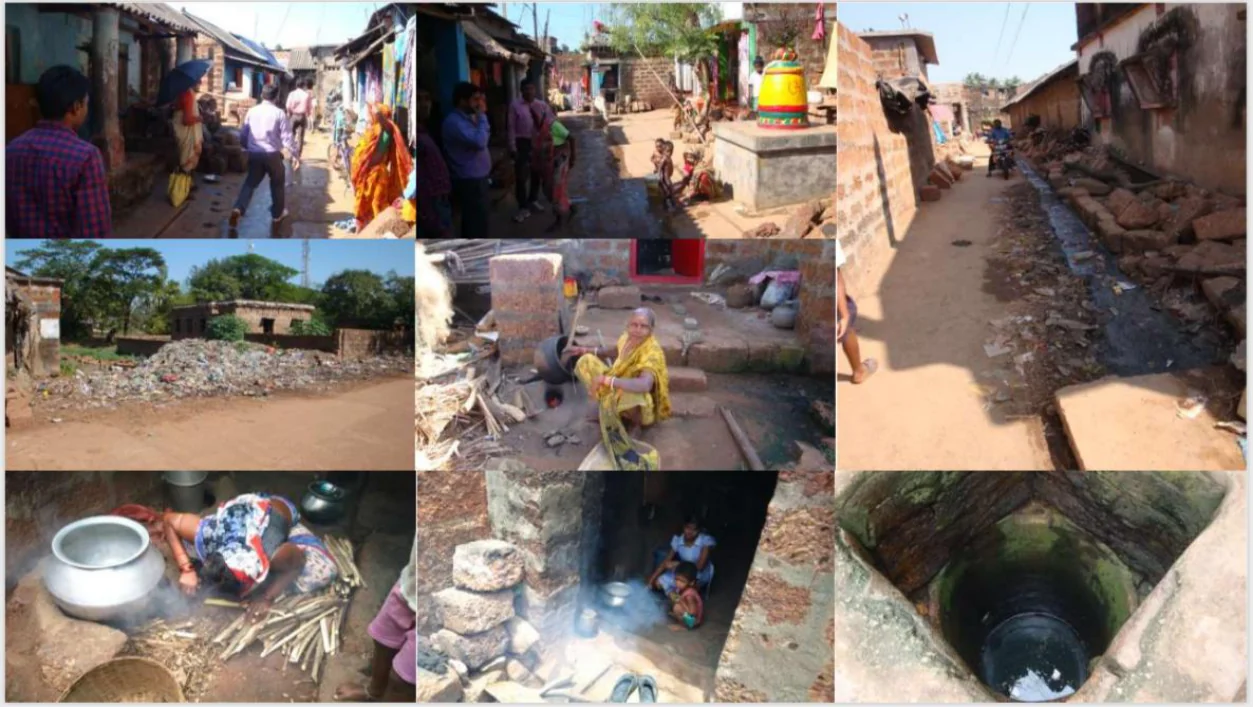
During one such visit, a transect walk was organized for a group of students, to allow interaction with villagers and learn about different health-related issues prevalent in those areas. Students could identify problems like overcrowding, malnutrition, sanitation issues, geriatric health issues, poor solid waste management, indoor air pollution, respiratory illnesses, diarrhea due to unsafe drinking water, etc. that required interventions at multiple levels. (Picture 1)
This was followed by group discussions, key informant interviews, village leader meetings to identify felt needs and areas that needed priority health actions. Most respondents felt that frequent outbreaks of acute diarrheal diseases and jaundice often affected large number of children and elderly and these needed some interventions. Bhusandapur was one of the most overcrowded sectors with unsanitary conditions in many villages. Groundwater (Dug well/ Spring well/ Tube well) was the primary source of drinking water, and since most were open wells, they were frequently contaminated and unsafe for consumption. People used open ponds for bathing and recreational purposes and practiced open-air defecation that increased risk of water pollution.
So, we decided to take-up water management issue and along with a team of members of faculty (Department of Community and Family Medicine), a group of students visited one of the villages in Bhusandapur, i.e. Tentuliapara village in Tangi block during their second clinical posting in 2015. The reason we chose this village was because of familiarity with the socio-demographic profile of the inhabitants during earlier public health surveys [10], the anticipation of better co-operation for educational activity, and observance of poor quality of well water in the village during the site visit. This place was overcrowded and like most others, depended primarily on well water for meeting its drinking requirements.(Picture 2) Residents here and in nearby villages had witnessed a number of infectious disease outbreak due to unsafe water and overcrowded settings and some of these have been reported previously.[10,11]
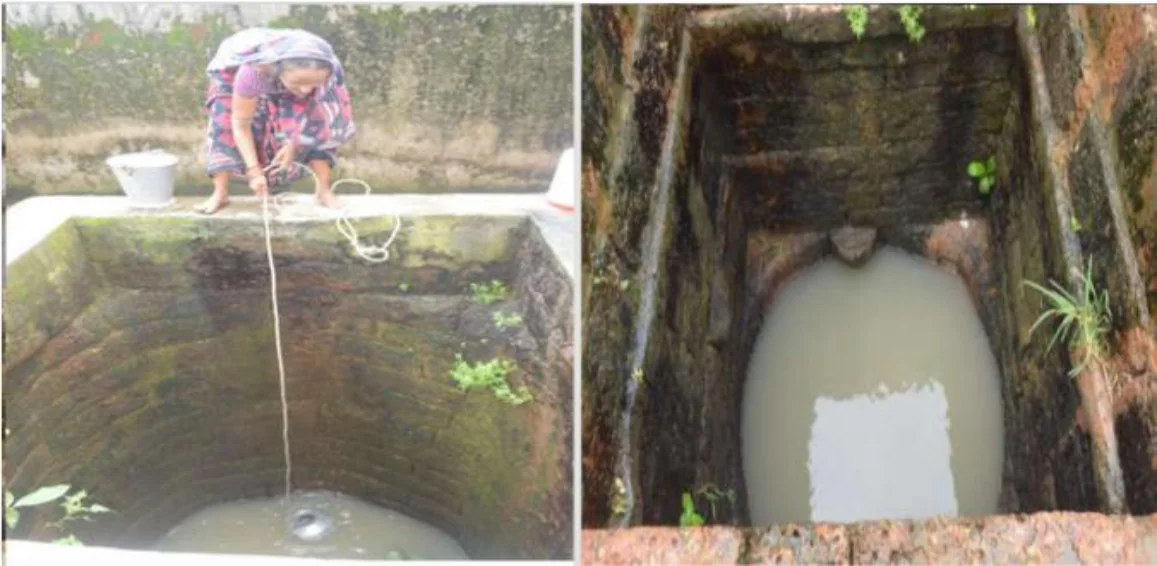
The preliminary survey suggested that most people used this well water (Picture 2) for their daily consumption without any pre-treatment. The water was turbid, open to the air and often received bird droppings from overhanging branches of nearby trees. Very few families boiled water particularly before feeding their children or cooking food for other adult members in the family. Boiling though effective [12] wasn’t a viable option to many, as they had to purchase firewood. We also visited the block development officer of the area, who in principle agreed to help clean up the well using ear-marked funds. But we anticipated procedural delay at that time due to local elections. The plight of the villagers compelled us to do something and try to improve their living in the best possible way until long term solutions were sought.
Intervention
With this background in mind, we decided to develop an intervention and empower people to take steps to at least carry out some pretreatment prior to water consumption and render it safe. Our preliminary discussions with environmental experts in Odisha led us to nearby CSIR-IMMT (Institute of Material and Mineral Technology) [13], who we found had championed in rural technologies. They introduced us to a low-cost terafil red clay filters that were available commercially for domestic use for Rs 500-700, particularly suitable for turbid and high iron containing drinking water.[14–16] High-quality plastic specially designed for the filter was used. There was also some profit margin for the vendor. The filter appeared to do well with respect to various physical, chemical, biological parameters as demonstrated to us in their Laboratory.
Then we returned back to the village on a pre-appointed day to a common gathering place for spreading awareness about health hazards of unsafe drinking water, methods for household water treatment, the importance of hand hygiene, and safe water storage to safeguard health against various pathogens that could cause enteric infections. (Picture 3).
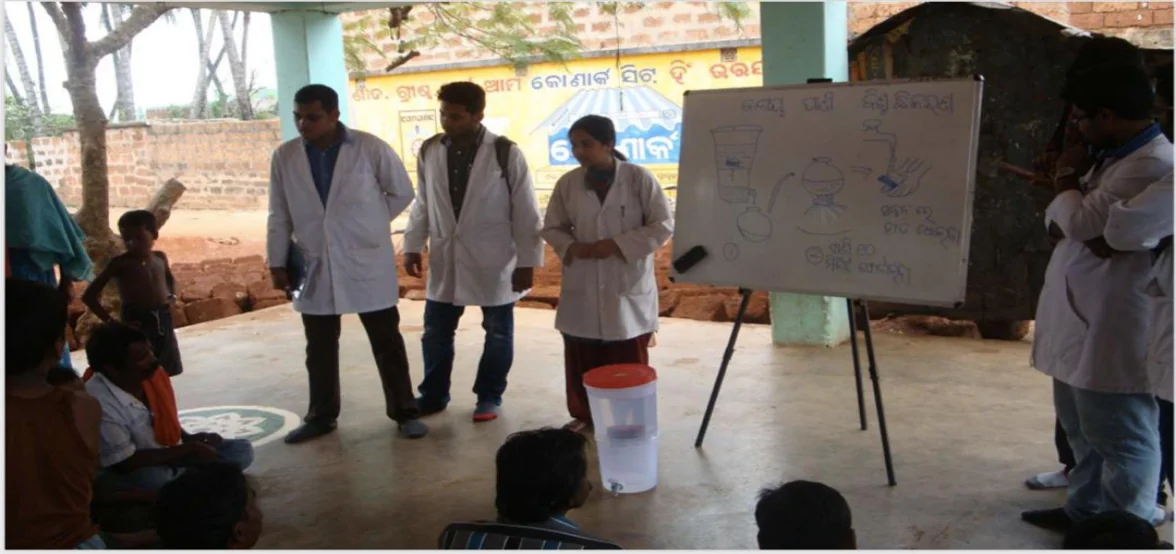
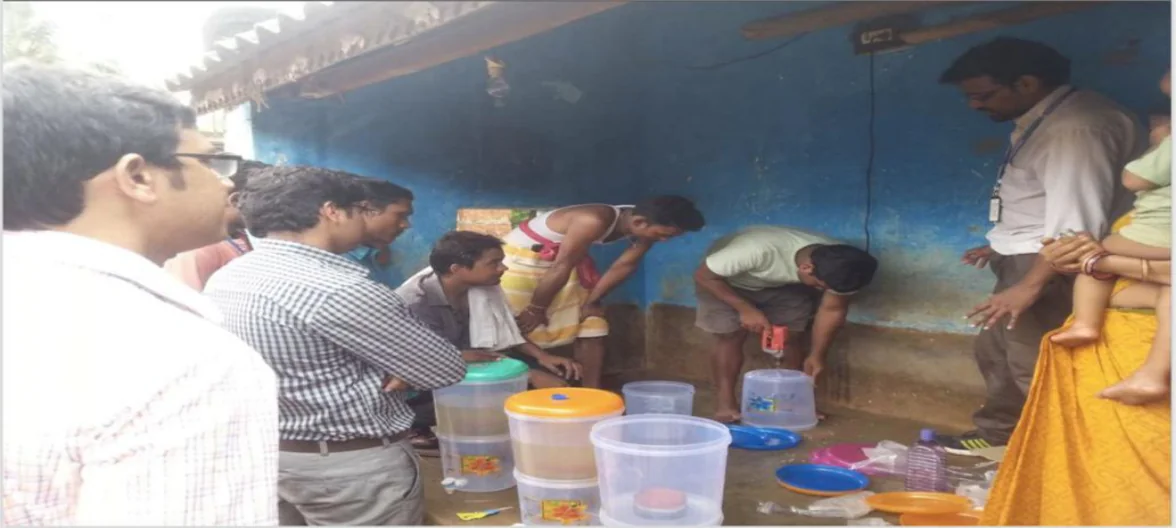
After the session, we held meetings with both women and men to explore various treatment practices they were willing to adopt to ensure water safety. We realized that some of them were willing to invest in terafil water filters, but not at the price available in the market. So, the students (authoring this paper) decided to make their own low-cost filters by fitting the terafil discs (available separately from producer) to food grade plastics (Picture 4), tested its biological efficacy in Dept of Microbiology at AIIMS BBSR, and brought down its cost to Rs 220. The primary way of cost-cutting was by use of cheaper food grade plastics, and nil profit margin. However, the presence of coliforms would also depend on retention of integrity of terafil discs during the assembly. To be safe, we had decided to stress only on the turbidity and iron content part of water and stress on hand hygiene and boiling as additional measures during water consumption in addition to filtration to safeguard against pathogens.
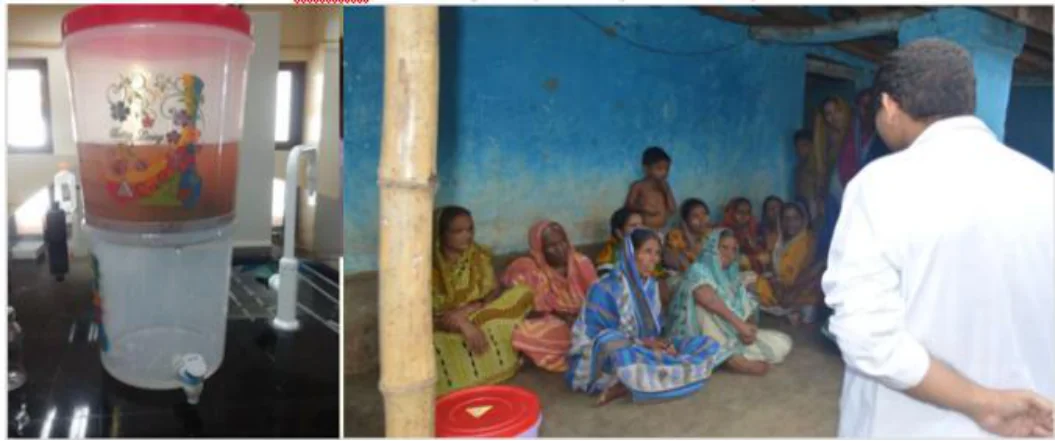
Once the filter was ready, we contacted the villagers and identified a woman leader (Picture 5) who motivated five families and they all expressed their interest in purchasing these filters at low cost (NoProfit-No loss).
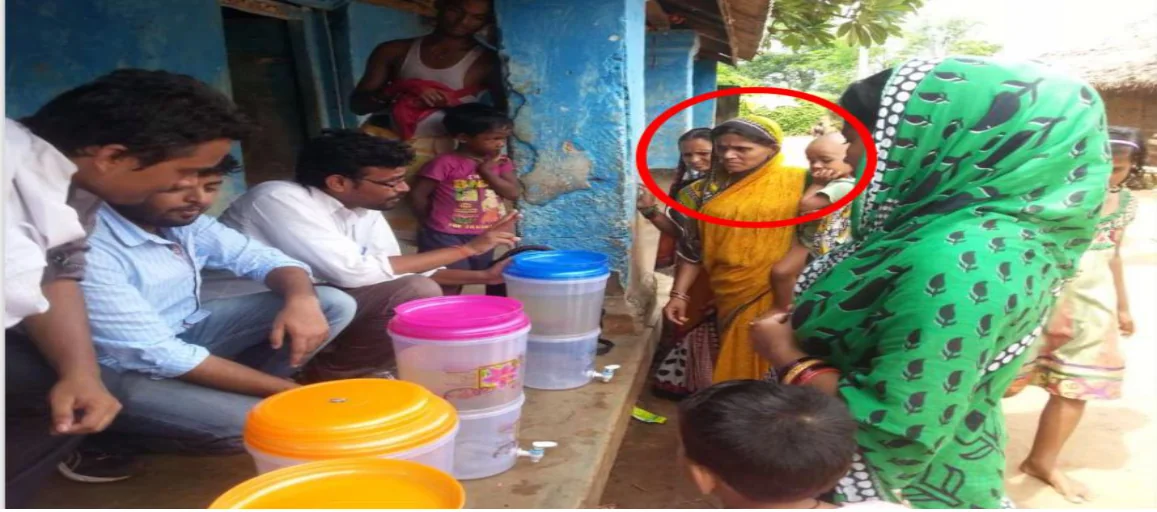
At this stage, knowing well that after the conclusion of community posting students wouldn’t be able to continuously support this activity, we decided to carry out a skill transfer session hoping that some interested villagers might take up the responsibility of making their own filters. So, we decided to make these filters in the presence of villagers. This would serve multiple purposes, it would help in our safe water advocacy, build up interest and demand for using filters, help identify skilled persons who could undertake the task. We were finally able to identify a carpenter from the village who could easily follow our instructions to make these filters as seen in Picture 6.
We left the village after handing over the filters (Picture 5), hoping people would slowly accept these filters. We later followed up after a month. The families who initially purchased the filters continued using them. They were satisfied with its performance. However, we were unable to sustain motivation among identified persons (Women leader and carpenter) to make their own filters due to their other competing economic interests and other reasons mentioned below.
As a central institute, our role was restricted to evidence generation and advocacy. We couldn’t intervene policy level decisions immediately, as it required long term efforts. Our ongoing teaching programme compelled us to move forward and turn our attention to other areas in the department. We couldn’t witness a complete transformation as hoped earlier but we did gather some interesting lessons, that such an effort was doable and use of safe water filters could be scaled up with better stakeholder support and planned involvement of all concerned. This required separate activity in a sustained manner.
Lessons learnt
Though the exercise was successful in many ways, still there was a difference in the way people perceived and processed the information given to them during this activity. There were many who still believed that natural untreated water was better as compared to one that had external chemicals added to it. Most elderly men were very rigid in accepting new information and felt that boiling destroyed the taste of the water. Most male members (decision makers) however relied heavily on governments to take initiative to provide safe water. Rather than taking health in their own hands and proactively doing something within their resources, they spend more time blaming the governments for inaction.
But there were few households, that had experienced negative impact like hospitalization/death in their families due to diarrhea, who were more receptive. So were the elderly and young female members of the village, who were keen to understand and implement various water treatment options. It appeared that education didn’t make much of a difference, as much as proof of harm. This means changing the health belief model by using better communication strategy, and frequent sessions could possibly influence health related behaviours, particularly among the decision makers in the family.
We also learnt interesting leadership lessons through this exercise. We exhibited systems thinking by using qualitative methods to identify problems, finding the most cost-effective solutions that were acceptable, and successfully implementing it. We demonstrated collaborative leadership by accessing cheap rural technology at IMMT. We successfully engaged with community members following recommended steps of behavior change communication [17], and led change through community participation. By designing cheaper filters and attempting skill transfer, our students demonstrated emotional intelligence.
Department faculty due to their own resource constraints (time, manpower, curriculum focus), couldn’t pursue this effort beyond five families, at that stage of inception and Institute development (AIIMS had just begun in 2012 with minimal health workforce). We weren’t able to further engage with the block development officer for offering long term solutions of cleaning up those wells and converting them into sanitary ones. In hindsight, we could have possibly collaborated and linked up these villages with relevant Civil Society organizations in Odisha [18] for further support and social transformations.
Future
We do realize that the question of enhancing the effectiveness of current sanitation drive (Swachh Bharat Mission) [19] to enhance last mile delivery in rural areas, engaging all stakeholders to develop pragmatic solutions and lead the change we wish to see is a matter of ongoing debate.[20] It is time, we accelerate steps to increase access to safely managed drinking water in households by creating models that are replicable.
Our experience in this village provides useful insights and affirms the need of further research to effectively engage local partners, exploit available social security schemes, carry out policy advocacy, and exhibit strategic transformational leadership [21] in bringing about a change we wish to see. This could be seen as a beginning and not an end in itself. We wish all of us are able to take small steps in our respective field practice areas and “Be the change we wish to see” as said by the father of the nation Mahatma Gandhi.
References
- Prüss-Ustün A, Wolf J, Corvalán C, Bos R, Neira M. WHO | Preventing disease through healthy environments: a global assessment of the burden of disease from environmental risks [Internet]. WHO. World Health Organization; 2016 [cited 2019 May 23]. Available from: https://www.who.int/quantifying_ehimpacts/publications/preventing-disease/en/
- Prüss-Ustün A, Bartram J, Clasen T, Colford JM, Cumming O, Curtis V, et al. Burden of disease from inadequate water, sanitation and hygiene in low- and middle-income settings: a retrospective analysis of data from 145 countries. Trop Med Int Health [Internet]. 2014 Aug [cited 2019 May 25];19(8):894–905. Available from: http://www.ncbi.nlm.nih.gov/pubmed/24779548
- Liu L, Chu Y, Oza S, Hogan D, Perin J, Bassani DG, et al. National, regional, and state-level all-cause and cause-specific under-5 mortality in India in 2000-15: a systematic analysis with implications for the Sustainable Development Goals. Lancet Glob Heal [Internet]. 2019 Jun 1 [cited 2019 May 25];7(6):e721–34. Available from: http://www.ncbi.nlm.nih.gov/pubmed/31097276
- WHO | International Network to Promote Household Water Treatment and Safe Storage [Internet]. WHO. World Health Organization; 2016 [cited 2019 May 26]. Available from: https://www.who.int/water_sanitation_health/water-quality/household/household-water-network/en/
- Wolf J, Prüss-Ustün A, Cumming O, Bartram J, Bonjour S, Cairncross S, et al. Systematic review: Assessing the impact of drinking water and sanitation on diarrhoeal disease in low- and middle-income settings: systematic review and meta-regression. Trop Med Int Heal [Internet]. 2014 Aug 1 [cited 2019 May 25];19(8):928–42. Available from: http://doi.wiley.com/10.1111/tmi.12331
- Czabanowska K, Smith T, Konings KD, Sumskas L, Otok R, Bjegovic-Mikanovic V, et al. In search for a public health leadership competency framework to support leadership curriculum-a consensus study. Eur J Public Health [Internet]. 2014 Oct 1 [cited 2019 May 26];24(5):850–6. Available from: http://www.ncbi.nlm.nih.gov/pubmed/24121098
- Mahajan P, Czabanowska K, Tripathy P, Pakhare A, Pawar R, Salelkar S, et al. European Public Health Leadership Competency Framework: What does it say about Indian public health professionals? Eur J Public Health [Internet]. 2016 Nov 1 [cited 2019 May 26];26(suppl_1). Available from: https://academic.oup.com/eurpub/article-lookup/doi/10.1093/eurpub/ckw166.017
- Helping India Manage its Complex Water Resources [Internet]. [cited 2019 May 26]. Available from: https://www.worldbank.org/en/news/feature/2019/03/22/helping-india-manage-its-complex-water-resources
- India - Water Resources Management: Restoring Water Bodies [Internet]. [cited 2019 May 26]. Available from: http://web.worldbank.org/archive/website01291/WEB/0__C-216.HTM
- Paul S, Mahajan PB, Sahoo J, Bhatia V, Subba SH. Investigating Mumps Outbreak in Odisha, India: An Opportunity to Assess the Health System by Utilizing the Essential Public Health Services Framework. Am J Trop Med Hyg [Internet]. 2017 May 3 [cited 2019 May 25];96(5):1215–21. Available from: http://www.ncbi.nlm.nih.gov/pubmed/28500809
- Paul S, Mahajan P, Bhatia V, Sahoo J, Hembram D. Investigation of jaundice outbreak in a rural area of Odisha, India: Lessons learned and the way forward. Community Acquir Infect [Internet]. 2015 [cited 2019 May 25];2(4):131. Available from: http://www.caijournal.com/text.asp?2015/2/4/131/172650
- WHO | Boil Water [Internet]. WHO. World Health Organization; 2016 [cited 2019 May 26]. Available from: https://www.who.int/water_sanitation_health/publications/boiling-water/en/
- CSIR - IMMT | Institute of Minerals and Materials Technology Bhubaneswar, Odisha [Internet]. [cited 2019 May 25]. Available from: http://www.immt.res.in/tech-profile.aspx
- IMMT Bhubaneswar. Terafilred clay water purification media [Internet]. [cited 2019 May 25]. Available from: http://www.immt.res.in/TechProfile/Terafilred clay water purification media.pdf
- S.Khuntia - TERAFIL water purification community plants in Karnataka state.mpg - YouTube [Internet]. [cited 2019 May 26]. Available from: https://www.youtube.com/watch?v=Xx3i0nfhdSc
- Terafil Water filtration System Presentation - YouTube [Internet]. [cited 2019 May 26]. Available from: https://www.youtube.com/watch?v=4cMmPUqLBKE
- Behaviour change communication (BCC) for community-based volunteers Volunteer toolkit [Internet]. [cited 2019 May 26]. Available from: www.ifrc.org
- WATER - Gram Vikas [Internet]. [cited 2019 May 26]. Available from: https://www.gramvikas.org/focus_area/water/
- Swachh Bharat Mission - Gramin, Ministry of Drinking Water and Sanitation [Internet]. [cited 2019 May 26]. Available from: http://swachhbharatmission.gov.in/sbmcms/index.htm
- Water, sanitation and hygiene – Odisha Vikash Conclave-2018 [Internet]. [cited 2019 May 26]. Available from: http://odishavikash.org/water-sanitation-and-hygiene-in-odisha/
- Czabanowska K. Public health competencies: prioritization and leadership. Eur J Public Health [Internet]. 2016 Oct 1 [cited 2019 May 26];26(5):734–5. Available from: https://academic.oup.com/eurpub/article-lookup/doi/10.1093/eurpub/ckw125
Published
Article metrics
- Views
- 1,904
- Downloads
- 1,280
Based on this site's usage statistics.