Short Review Vol. 4 No. 3 (2020): International J Health Systems and Implementation Research
Effectiveness of Non-Pharmacological Interventions in Containment of COVID-19 pandemic
Downloads
Topics
Keywords:
- COVID 19
- Mask
- Social Distance
- Hand Hygiene
- Personal Protective Equipment
Abstract
Coronavirus disease (COVID-19), a pandemic disease caused by SARS-CoV-2 virus has spread to 213 countries. Globally, the number of total confirmed cases has exceeded 10 million out of which 503 862 are dead. Current information suggests that COVID-19 is transmitted mainly by respiratory droplets and close contact. In the absence of effective vaccine or treatment, non-pharmacological interventions (NPI) remain the mainstay in the fight against COVID-19. However, the effectiveness of these NPIs is less studied and the evidence is evolving gradually. In this regard, we have done a scoping review of various published literature available in the public domain regarding non-pharmacological interventions against COVID-19 and summarized them. These findings shall help the policy makers to know the effects of each control measure and make a crucial decision in figuring out which ones can be safely implemented, altered or removed in our country to fight against this pandemic.
Full text
This web version was prepared from the published PDF, which is the version of record. Please cite and quote from the PDF.
Introduction
Pneumonia of unknown cause detected in Wuhan, China was first reported to the World Health Organization (WHO) Country Office in China on 31st December, 2019 [1]. On 11th February 2020, WHO announced a name for the new coronavirus disease ‘COVID-19’ and its aetiological agent as SARS-CoV-2 virus [2]. As on 30th June 2020, 10 185 374 confirmed cases and 503 862 deaths due to COVID-19 were reported across 213 countries, areas or territories [3]. COVID-19 is transmitted mainly by respiratory droplets and close contact [4]. The respiratory droplets are usually generated when an infected person coughs or sneezes and close contact is defined as any person coming within one-meter distance of a person coughing/ sneezing. Droplets which land on surfaces may remain viable for variable period and can act as a source of transmission [5].
COVID-19 disease is mainly transmitted by symptomatic laboratory confirmed cases and sometimes through pre-symptomatic transmission via infectious droplets or through touching contaminated surfaces [6]. The incubation period for COVID-19 is on average 5-6 days, but can be as long as 14 days [6]. In the absence of effective vaccine or treatment, non-pharmacological interventions (NPI) may prove useful in the fight against COVID-19 [7].
Need for the study
Various guidelines and advisories are being released globally and nationally in this regard. Use of face masks, hand hygiene and social distancing measures have been suggested in many of these guidelines and advisories, there is need to review the evolving evidence, for the effectiveness of these non-pharmacological interventions (NPIs): masking, hand hygiene and social distancing. The findings shall guide further policies and guidelines regarding NPIs.
Methods
We did a scoping review of the published literature from Jan to May 2020, regarding non-pharmacological interventions (NPI) against COVID-19 viz. masking, hand hygiene and social distancing that was available in public domain in English language irrespective of geographical area. The literature search included the databases/search engines (PubMed/ Medline, Google Scholar), WHO, Centre for Disease Control (CDC) and National Institute for Occupational Safety and Health (NIOSH) websites, COVID-19 related guidance documents from US Food and Drug Administration (FDA) website, Advisories regarding COVID-19 from Government of India (GOI) in MOHFW website (India) and Ministry of Labour and Employment (India). We have also reviewed the special editions/ issues on COVID-19 in selected scientific journals/blogs. We used the following keywords while searching in database/ search engines: ‘COVID 19’, ‘2019 novel coronavirus disease’, ‘SARS-CoV-2 infection’, ‘2019 novel coronavirus infection’, ‘2019-nCoV infection’ with ‘Respiratory Protective Devices’, ‘Personal Protective Equipment’, ‘Masks’, ‘Hand Hygiene’, ‘Social Distance’, ‘Reference Standards’ using Boolean operators ‘AND’, ‘OR’. The selected documents were reviewed by four public health specialists, an abstract or summary was read, if containing details of any one NPI was included in the review. The findings were described under three interventions viz., mask, hand hygiene and social distancing. Any difference of understanding or interpreting the documents was resolved by discussion and arriving at a consensus.
Results
A) Masking
Masking refers to the wearing of masks over the face covering the nose and mouth. Respiratory virus infections including COVID-19 cause a broad and overlapping spectrum of symptoms collectively referred to as acute respiratory virus illnesses (ARIs). These ARIs are usually mild but sometimes can cause severe disease including death. Coronaviruses, influenza viruses and rhinoviruses transmit from human-to-human through direct or indirect contact with respiratory droplets (>5 µm) and aerosols (≤5 µm). The contagiousness of individuals with coronavirus and influenza virus infections can vary considerably [8].
Masking helps in preventing the spread of infectious droplets from an infected person to other persons. It also prevents the surface contamination by these droplets. Stronger evidence exists for masking healthcare workers and limited evidence for masking general public [9,10]. Decision to consider masking shall include the purpose (source control or prevention of COVID 19), risk of exposure (population or individual), vulnerability of person/population to develop severe disease/ death, settings in which population live or person work, feasibility (availability and tolerability) and type of mask (medical/ non-medical) [9].
Medical masks are meant for single use only with exceptions during pandemics facing shortage of personal protective equipment (PPE) where reuse or extended use is recommended with cautions. However, before reusing or extending the use of PPEs one must effectively decontaminate the filtering facepiece (FFP)/ filtering facepiece respirators (FFR) using approved methods that reduce the burden of pathogens, preserve the function of the FFP/FFR, and leave no residual hazardous chemicals behind [11,12]. Also extended use is preferred to reuse of respirator [11]. It is better to use combination of interventions rather than masking alone, because even if one intervention fails/ not available then another intervention shall provide protection to the individual and community [13]. [Table 1]
| Particulars | Type of masks | ||
|---|---|---|---|
| Respirator/FFP/FFR | Medical Mask (surgical/procedure mask) | Non-medical Mask (community’ masks) | |
| Description | It is respiratory protective device designed to protect the wearer from exposure to airborne contaminants (infectious agents present in small and large particle droplets) and is classified as personal protective equipment (PPE) [14]. [Figure 1] | It is a loose-fitting disposable device that acts as physical barrier between the mouth and nose of the wearer and potential contaminants in the immediate environment [15] [Figure 1]. | It is made from cloth/ other textile materials/ paper. It can be self-made or commercially made [Figure 1]. |
| Seal Check & Fit Test | Achieve a very close facial fit as the edges of the respirator are designed to form a seal around the nose and mouth. | The edges of the mask are not designed to form a seal around the mouth and nose. | The edges of the mask are not designed to form a seal around the mouth and nose. |
| Recommended Use | Healthcare workers -to protect themselves, especially during aerosol-generating procedures. Respirators with valves do not prevent the release of exhaled respiratory particles from the wearer into the environment, hence not recommended for the use as a means of source control [16]. | Healthcare workers -designed to protect the wearer from large respiratory droplets and splashes to the mouth and the nose and also helps to reduce and/or control at the source the spread of large respiratory droplets from the person wearing the face mask [14]. | General Public - use simple cloth face coverings when in a public setting to slow the spread of the virus, since this will help in preventing the transmission of the virus from wearer to others. |
| Certification/ Standards | International Standards American standard managed by NIOSH (part of CDC) -N95/N99/N100 European standard EN standard 149:2001 and EN standard 143 CoversP1/P2/P3 ratings for FFP [16]. Indian Standards Bureau of Indian Standard, BIS 9473-2002 standards specify respirators shall meet requirements of Breathing resistance, Penetration of filter material, Flammability, Leakage, Vision, Head harness, CO2 inhalation, Clogging, Compatibility with Skin [17] | Indian Standards Bureau of Indian Standard, BIS 16289: 2014 specifies the performance requirements and test methods of surgical facemasks [18] Classes: Class 1, Class 2 and Class 3 as per Bureau of Indian Standard and based on following criteria: performance requirement such as Bacterial filtration efficiency, Differential Pressure, Splash Resistance, Sub micron particulate filtration efficiency. | They are not standardized and are not intended for use by healthcare workers professionals, those working with or in contact with COVID 19 patients or are patients themselves. They are intended to be used by the general public only especially people living in densely populated areas across India. |
| Effectiveness | Very effective in filtering particles with size of approx. 0.3microns. Respirator Standard Filter Capacity depends on the type [19,20]. FFP1 & P1 ~ 80% FFP2 & P2 ~ 94% N95 ~ 95% N99 & FFP3~ 99% P3 ~ 99.95% N100 ~ 99.97% The European equivalents to N95 are FFP2 / P2. | Effective in reducing coronavirus detection and viral copies in large respiratory droplets and in aerosols [8]. However, they may not filter/ block very small particles in the air and do not provide complete protection against germs / contaminants because of the loose fit between the surface of the mask and face [15]. | Non-medical face masks are less effective compared to medical masks as a means for source control [21]. There are no established standards available for non-medical face masks. |
| Structure | Material: of non-woven fabric, often made from polypropylene. Layers: Multiple layers [22] 1 Outward layer - created using spun bonding. 1 Pre-filtration layer - needled nonwoven 1 Filtration layer - High efficiency melt blown electret/ polarized non-woven material 1 Pre-filtration layer - needled nonwoven 1 Inward layer - created using spun bonding. | Material: of non-woven fabric, often made from polypropylene. Layers: 3-layers [23] 1 Outer layer: Waterproof against droplet spray (usually coloured) 1 Middle layer: Particle filter to block pathogens 1 Inner layer: Water absorbent to absorb breathed out moisture. | Material: cotton cloth Layers: Multiple layers preferably 3 layers [24]. Stitched with pleats and ear loops or ties. |
| Disposal | Used respirator should be segregated/ discarded safely in a yellow bag in a yellow colour biomedical waste bin with a lid. One must wash hands after handling the used respirator [25]. | Used medical mask should be safely discarded in a yellow bag in yellow colour biomedical waste bin with a lid. One must wash hands after handling the used respirator [25]. | Waste masks in general households should be kept in paper bag for a minimum of 72 hours prior to disposal of the same as dry general solid waste after cutting the same to prevent reuse. Wash your hands after handling the used mask [25]. |
| Re-use* | Not recommended routinely. Allowed only during crisis and shortage of PPE. Ultraviolet germicidal irradiation, vaporous hydrogen peroxide and moist heat are the most promising decontamination methods. However, discard if used during aerosol generating procedures, respirators contaminated with blood, respiratory or nasal secretions, or other bodily fluids from patients [11]. | Surgical masks are not recommended to be used more than once. If your surgical mask is damaged or soiled, or if breathing through the mask becomes difficult (increased resistance), you should remove the face mask, discard it safely, and replace it with a new one [15]. | One of the advantages of nonmedical face masks made of cloth or other textiles is that can be washed and reused and they can be made easily. However, one must thoroughly wash and clean the face cover before wearing it again. Never share the face cover [26]. |
| Alternatives | Alternatives to N95 respirators - other classes of filtering facepiece (FFP) respirators, elastomeric half-mask and full facepiece air purifying respirators, powered air purifying respirators. | Face shield, Physical barriers and physical distancing (>1m) with patient. | If no mask, cover your mouth and nose with elbow while coughing and sneezing. |
Note: *Reuse means using the same respirator for multiple encounters with patients, removing it/ doffing after each encounter, storing it in between the encounters and to put on/ donning again before encounter with a patient. Extended use means wearing the same respirator for encounters with several patients, without removing the respirator in between patients encounters [11].
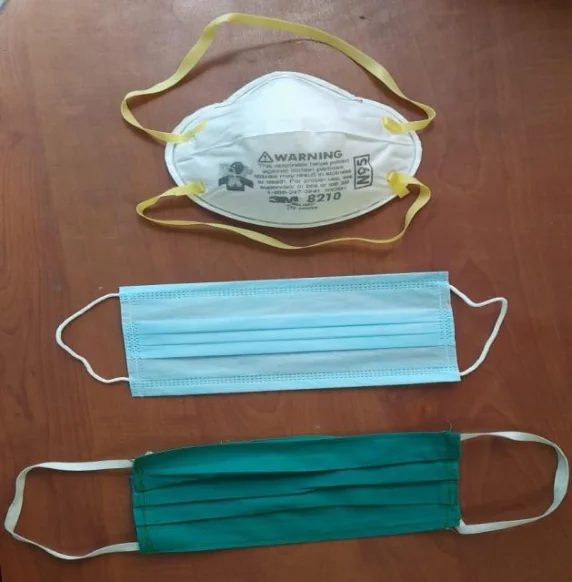
Counterfeit masks
Counterfeit masks/ respirators refers to any products that are marketed/ sold in the market with false information as NIOSH-approved/ any equivalent approvals without actually being approved by any of these approval agencies, thus may not be capable of providing adequate protection against respiratory pathogens to workers. Government of India (GOI) has declared masks and sanitizers’ as ‘essential commodities’ up to June 30, 2020 as per the notification under the Essential Commodities Act [27]. The purchaser of masks shall look into the features of correct exterior markings to avoid falling prey to counterfeit masks. In India one can check for BIS 9473-2002 standards [17] for FFP/FFR and BIS 16289: 2014 standards [18] for surgical masks in addition to NIOSH TC approval number (can be checked from website URL: https://wwwn.cdc.gov/niosh-cel/) [28]. Additionally, one can check for permission of manufacturer/ seller by the Directorate General Factory Advice Service & Labour Institutes (DGFASLI) under Ministry of Labour & Employment, India, Respirator test certificate from NABL accredited lab and compliance to Good Manufacturing Practice (GMP) certificate.
Summary of Masking
Respirators do not eliminate the risk of contracting disease or infection but reduces the risk of transmission if they are used in conjunction with other infection control measures such as hand hygiene, social (physical) distancing, patient identification, isolation, negative pressure ventilation, and healthcare worker screening [29]. The community which follows masking alone may develop false sense of security, ignoring other essential interventions like hand hygiene practices and physical distancing. These communities may also take away the medical masks away from health care workers who need them most, especially when masks are in short supply. Hence, general public shall continue using cloth face coverings as recommended by CDC and not surgical masks/ N-95 respirators that are critical supplies and need to be reserved for healthcare workers and other medical first responders [10].
B) Hand Hygiene
Hand hygiene refers to any action of hand cleansing and it’s a measure of personal hygiene [30]. Hand hygiene is one of the primary measures in reducing many bacterial and/or viral infections. As per WHO and UNICEF, there are inadequate hand hygiene facilities at home for the majority of the world population and also at healthcare facilities [31].
Coronavirus can be detected in aerosols for up to three hours and on plastic and stainless-steel surfaces for up to three days. These findings emphasize the importance of handwashing and disinfecting frequently touched objects and surfaces [32]. A study conducted in 2009 during the pandemic of influenza (H1N1) found the use of face masks with hand hygiene showed a significant reduction in virus transmission [33]. The efficacy of hand hygiene in reducing transmission of SARS-CoV-2 virus will depend on the primary mode of its transmission: droplets or aerosols. The more likely the virus transmitted by large droplets, the more likely that hand hygiene will reduce transmission [34, 35]. WHO has recommended alcohol-based hand rubs such as those containing ethanol (80% v/v) or isopropanol (75% v/v) as active components, have a marked virucidal effect against SARS-CoV and MERS-CoV [30, 36].
Types of hand hygiene [37]:
- Social handwashing - i.e. with soap and water; practiced when the hands are soiled, before starting work, before handling food or leaving for home, and after visiting the toilet, or cleaning sessions (minimum 20 seconds).
- Hygienic hand-washing - washing with an antiseptic handwash preparation (or handwashing followed by an alcohol-based antiseptic hand rub); practiced before any procedure involving high-risk patients or an invasive procedure, and after contact with infected patients, contaminated material or equipment (minimum 40-60 seconds).
- Surgical hand-washing - practiced before all major surgical procedures, usually a two-minute hand wash using an antiseptic preparation.
Studies showed lack of knowledge, too busy with work, feeling not at risk, having sore/dry hands, peers/other family members not practicing, lack of water supply as some of the most common reasons for poor-compliance to hand hygiene [38-40].
Agents of hand hygiene
The choice of hand-washing product depends on its intended use.
Water - Water is a good solvent for a large number of substances including dirt, organic material and transient microorganisms. Water should be free from physical, chemical and bacteriological contaminants. Frequent cleaning and/or emptying of water storage containers need to be done.
Plain (non-antimicrobial) soap - These are products with minimal antimicrobial activity, are detergent-based containing esterified fatty acids and sodium/potassium hydroxide. However, handwashing with plain soap can remove loosely adherent transient flora for example, handwashing with plain soap and water for 30 seconds reduces counts by 1.8–2.8 log10 [41]. Hand Hygiene with both alcohol-based hand rub and soap with water is highly effective in reducing influenza A virus on human hands [42].
Alcohols– Majority of the alcohol-based agents contain either ethanol, isopropanol or n-propanol, or a combination of two of these products. Alcohol preparations containing at least 60–80% of alcohol is best compared to higher concentrations which are less potent. Ethanol, the most common alcohol ingredient is most effective against viruses; whereas, the propanol has a better bactericidal [43, 44]. These are rapidly germicidal on skin but have no appreciable persistent (residual) activity but on addition of chlorhexidine or quaternary ammonium compounds their persistent activity is increased [42,45]. A synergistic combination of a humectant (glycerine) and preservatives can prolong the activity against transient pathogens [46]. There are many factors affecting the efficiency of hand hygiene like the type, concentration, contact time, volume and dryness of the palms at the time of alcohol product application. As alcohol isn’t effective when the hands are dirty/visibly contaminated as it’s not a good cleansing agent [47, 48].
A study on the efficacy of different alcohol hand rubs and routine hand wash among healthcare workers revealed that the median percentage reductions in hand contamination with alcohol-based liquid/gel compared to soap & water [49]. Many studies have demonstrated that having bedside alcohol-based solutions available increased compliance with hand hygiene among Health Care Workers [50-53].
Alcohols are flammable. As the flashpoint of alcohol is 21°C - 24°C, it should be stored away from high temperatures or flames and after application, hands should be rubbed together until all the alcohol has evaporated [54, 55].
Chlorhexidine– Majority of hand sanitizers has Chlorhexidine gluconate. Aqueous or detergent formulations containing 0.5%, 0.75%, or 1% chlorhexidine are more effective than plain soap but are less effective than antiseptic detergent preparations containing 4% chlorhexidine gluconate [56, 57]. Chlorhexidine has significant residual activity. Hence, it is mixed in low concentrations (0.5–1%) with alcohol-based preparations to increase their residual action. Care must be taken to avoid contact with the eyes as these preparations can cause conjunctivitis or serious corneal damage.
Iodine and iodophors – Skin irritation and/or discoloration have resulted in iodophors replacing iodine in the majority of the antiseptic preparations. It's the amount of ‘free iodine’ which determines the level of antimicrobial activity. A10% povidone-iodine formulations have1% available iodine and 1ppm free iodine [58]. Atmospheric temperature, pH, time exposed, total available iodine, the amount and type of organic and/or inorganic compounds present (e.g., alcohols, detergents) affect the antimicrobial activity of iodophors. Most of the iodophor preparations containing 7.5–10% povidone-iodine are used in hand hygiene preparations. Any formulations with lesser concentrations could also be used as dilution results in increase free iodine availability. As the number of free iodine increases, however, the degree of skin irritation also increases [59].
Non-Alcohol-Based Hand Sanitizers – Most of the non-alcohol sanitizers contain a quaternary ammonium compound, Benzalkonium Chloride. It’s non-flammability and in lower concentration it’s relatively non-toxic. Usually, these solutions are often available in water-based foam preparations and are much easier to use and after drying also will provide protection. They pose much less of a threat in cases of accidental ingestion or as a potential fire hazard and are non-damaging to surfaces [60].
Hand drying - Hand drying is an essential step as wet hands lead to transmission of microorganisms. Hot air dryers and Paper/cloth towels are some of the commonly used methods.
Summary of Hand Hygiene
The choice of agent in hand hygiene is based on whether it is important to reduce and maintain minimal counts of colonizing flora as well as remove transient microorganisms. Agents selected for hand hygiene should have good bacterial activity against a range of microorganisms and minimal toxicity to the skin. We need to analyze the cost of using either effective/safe/acceptable hand-washing solutions and compare with human and economic costs in cross-infection and decide for ourselves the importance of hand hygiene.
| Details | Formulation I | Formulation II |
|---|---|---|
| Strength of Preparation | To produce final concentrations of ethanol 80% v/v, glycerol 1.45% v/v, hydrogen peroxide 0.125% v/v. | To produce final concentrations of isopropyl alcohol 75% v/v, glycerol 1.45% v/v, hydrogen peroxide 0.125% v/v: |
| Ingredients for Preparation | Ethanol 96% v/v, 833.3 ml | Isopropyl alcohol (with a purity of 99.8%), 751.5 ml |
| Hydrogen peroxide 3%, 41.7 ml | Hydrogen peroxide 3%, 41.7 ml | |
| Glycerol 98% ,14.5 ml | Glycerol 98%, 14.5 ml | |
| Preparation Method | To the above ingredients, top up to 1000 ml with distilled or boiled and cooled water and shake the flask gently to mix the content. | To the above ingredients, top up to 1000 ml with distilled or boiled and cooled water and shake the flask gently to mix the content. |
Conclusion
The non-pharmacological interventions viz. masking, hand hygiene and social distancing are effective in preventing the transmission of COVID-19 and slowing down its transmission in the country. These interventions are to be utilized in conjunction with each other rather than in isolation.
Recommendations
The findings of this study shall help policy makers for knowing the effects of each intervention/control measure to figure out which ones can be safely implemented, altered or removed in our country to fight against this COVID-19 pandemic.
Financial support and sponsorship
Nil
Conflicts of interest
There are no conflicts of interest.
Acknowledgment
None
References
- World Health Organization. Pneumonia of unknown cause – China [Internet]. 2020 [cited 2020 Aug 7]. Available from: https://www.who.int/csr/don/05-january-2020-pneumonia-of-unkown-cause-china/en/
- World Health Organization. Naming the coronavirus disease (COVID-19) and the virus that causes it [Internet]. Geneva: World Health Organization; 2020 [cited 2020 Aug 7]. Available from: https://www.who.int/emergencies/diseases/novel-coronavirus-2019/technical-guidance/naming-the-coronavirus-disease-(covid-2019)-and-the-virus-that-causes-it
- World Health Organization. Coronavirus disease 2019 (COVID-19) Situation Report – 162. Geneva: WHO, 2020 June 30 [cited 2020 June 30]. Report No. 162 Available from: https://www.who.int/docs/default-source/coronaviruse/20200630-covid-19-sitrep-162.pdf?sfvrsn=e00a5466_2
- World Health Organization. Report of the WHO-China Joint Mission on Coronavirus Disease 2019 (COVID-19) [Internet]. Geneva: World Health Organization; 2020 [cited 2020 Jul 28]. Available from: https://www.who.int/docs/default-source/coronaviruse/who-china-joint-mission-on-covid-19-final-report.pdf
- World Health Organization. Modes of transmission of virus causing COVID-19: implications for IPC precaution recommendations. Geneva: WHO, 2020 Mar 29 [cited 2020 Apr 30]. Scientific Brief Available from: https://www.who.int/publications-detail/modes-of-transmission-of-virus-causing-covid-19-implications-for-ipc-precaution-recommendations
- World Health Organization. Coronavirus disease 2019 (COVID-19) Situation Report – 73. Geneva: WHO, 2020 Apr [cited 2020 Apr 27]. Report No. 73 Available from:https://www.who.int/docs/default-source/coronaviruse/situation-reports/20200402-sitrep-73-covid-19.pdf
- World Health Organization. Calibrating long-term non-pharmaceutical interventions for COVID-19 [Internet]. Geneva: World Health Organization; 2020 p. 13. Available from: https://apps.who.int/iris/bitstream/handle/10665/332099/WPR-DSE-2020-018-eng.pdf?sequence=1&isAllowed=y
- Leung, N.H.L., Chu, D.K.W., Shiu, E.Y.C. et al. Respiratory virus shedding in exhaled breath and efficacy of face masks. Nat Med (2020).https://doi.org/10.1038/s41591-020-0843-2
- World Health Organization. Advice on the use of masks in the context of COVID-19. Geneva: WHO, 2020 Apr 6 [cited 2020 Apr 28]. Available from:https://www.who.int/publications-detail/advice-on-the-use-of-masks-in-the-community-during-home-care-and-in-healthcare-settings-in-the-context-of-the-novel-coronavirus-(2019-ncov)-outbreak
- Recommendation Regarding the Use of Cloth Face Coverings [Internet]. Centers for Disease Control and Prevention. Centers for Disease Control and Prevention; 2020 [cited 2020Apr30]. Available from:https://www.cdc.gov/coronavirus/2019-ncov/prevent-getting-sick/cloth-face-cover.html
- “CDC - Recommended Guidance for Extended Use and Limited Reuse of N95 Filtering Facepiece Respirators in Healthcare Settings - NIOSH Workplace Safety and Health Topic.” Centers for Disease Control and Prevention, Centers for Disease Control and Prevention, 27 Mar. 2020, Available from www.cdc.gov/niosh/topics/hcwcontrols/recommendedguidanceextuse.html.
- Ma QX, Shan H, Zhang CM, et al. Decontamination of face masks with steam for mask reuse in fighting the pandemic COVID-19: experimental supports [published online ahead of print, 2020 Apr 22]. J Med Virol. 2020;10.1002/jmv.25921. doi:10.1002/jmv.25921
- Strategies for Optimizing the Supply of N95 Respirators: COVID-19 [Internet]. Centers for Disease Control and Prevention. Centers for Disease Control and Prevention;2020[cited2020Apr30].Availablefrom: https://www.cdc.gov/coronavirus/2019-ncov/hcp/respirators-strategy/index.html?CDC_AA_refVal=https://www.cdc.gov/coronavirus/2019-ncov/hcp/respirators-strategy/crisis-alternate-strategies.html
- National Institute for Occupational Safety and Health (NIOSH). Use of respirators and surgical masks for protection against healthcare hazards [internet]. Atlanta: CDC; 2018 [accessed 1 April 2020]. Available from:https://www.cdc.gov/niosh/topics/healthcarehsps/respiratory.html 2.
- N95 Respirators, Surgical Masks, and Face Masks [Internet]. U.S. Food and Drug Administration. 2020 [cited 28 July 2020]. Available from: https://www.fda.gov/medical-devices/personal-protective-equipment-infection-control/n95-respirators-surgical-masks-and-face-masks
- European Centre for Disease Prevention and Control (ECDC). Safe use of personal protective equipment in the treatment of infectious diseases of high consequence. Stockholm: ECDC; 2014. Available from: https://www.ecdc.europa.eu/sites/default/files/media/en/publications/Publications/safe-use-of-ppe.pdf
- Bureau of Indian standards. Product manual for respiratory protective devices – filter half masks to protect against particles According to IS 9473:2002. New Delhi: Bureau of Indian Standards; 2019 p. 1-8. Available from: https://bis.gov.in/wp-content/uploads/2019/08/PM-9473-final.pdf
- Bureau of Indian standards. Product Manual For Medical Textiles — Surgical Face Masks According to IS 16289:2014. New Delhi: Bureau of Indian Standards; 2020 p. 1-6. Available from: https://bis.gov.in/wp-content/uploads/2020/05/Revised-PM_IS_16289.pdf
- N95 vs FFP3 & FFP2 masks - what's the difference? [Internet]. Fast Life Hacks. 2020 [cited 20 July 2020]. Available from: https://fastlifehacks.com/n95-vs-ffp/
- Government of Karnataka. Guidelines for antenatal, intranatal, postnatal and newborn management of COVID-19. Bangalore: National Neonatology Forum-Karnataka; 2020 p. 105. [Google Scholar]
- Davies A, Thompson K-A, Giri K, Kafatos G, Walker J, Bennett A. Testing the efficacy of homemade masks: would they protect in an influenza pandemic? Disaster medicine and public health preparedness. 2013;7(4):413-8. [doi:10.1017/dmp.2013.43]
- How to Make N95 Masks [Internet]. A Manufacturing Guide. [cited 2020 Apr 30]. Available from:https://www.thomasnet.com/articles/plant-facility-equipment/how-to-make-n95-masks/
- Chung C. Masks: How to choose, wear & dispose [Video] [Internet]. Medium. Medium; 2020 [cited 2020Apr30]. Available from:https://medium.com/@cestclaire/masks-how-to-choose-wear-dispose-video-b22b4792b881
- World Health Organization. Advice on the use of masks in the context of COVID-19. Geneva: WHO, 2020 June 5 [cited 2020 July 28]. Available from: https://www.who.int/publications/i/item/advice-on-the-use-of-masks-in-the-community-during-home-care-and-in-healthcare-settings-in-the-context-of-the-novel-coronavirus-(2019-ncov)-outbreak
- Central Pollution Control Board. Guidelines for Handling, Treatment and Disposal of Waste Generated during Treatment/Diagnosis/ Quarantine of COVID-19 Patients. Delhi: Central Pollution Control Board; 2020 p. 1-11. [Google Scholar]
- Ministry of Health and Family Welfare. Advisory on use of Homemade Protective Cover for Face & Mouth. Office of the Principal Scientific Advisor to the Government of India. 2020 April 3. [cited 2020Apr 28 ] Available fromhttps://www.mohfw.gov.in/pdf/Advisory&ManualonuseofHomemadeProtectiveCoverforFace&Mouth.pdf
- PTI. Coronavirus: Hand Sanitisers and Surgical Masks Notified as Essential Commodities to Curb Hoarding. News18 India 2020 Mar 13:71,6. https://www.news18.com/news/india/govt-notifies-hand-sanitizers-surgical-masks-gloves-as-essential-commodities-amid-coronavirus-spread-2536437.html)
- CDC-NIOSH-NPPTL: Certified Equipment List Search [Internet]. Wwwn.cdc.gov. 2020 [cited 4 August 2020]. Available from: https://wwwn.cdc.gov/niosh-cel/
- Infection Prevention N95 Particulate Respirators: Frequently Asked Questions. [Internet]. Infection Prevention N95 Particulate Respirators: Frequently Asked Questions. USA: 3M; [cited 2020Apr29]. Available from: https://multimedia.3m.com/mws/media/323208O/n95-particulate-respirators-1860-1860s-1870-faqs.pdf
- WHO Guidelines on Hand Hygiene in Health Care. First Global Patient Safety Challenge Clean Care is Safer Care. Available at URL:https://www.who.int/patientsafety/information_centre/Last_April_versionHH_Guidelines%5B3%5D.pdf [cited 25th April 2020]
- World Health Organization; UNICEF. WASH in health care facilities. Global baseline report 2019. Available at URL:https://www.who.int/water_sanitation_health/publications/wash-in-health-care-facilities-global-report/en/ [cited 25th April 2020].
- NIH Research Matters. Available at URL:https://www.nih.gov/news-events/nih-research-matters/study-suggests-new-coronavirus-may-remain-surfaces-days [cited 25th April 2020].
- Aiello AE, Murray GF, Perez V, et al. Mask use, hand hygiene, and seasonal influenza-like illness among young adults: a randomized intervention trial. J Infect Dis. 2010;201(4):491–498. doi: 10.1086/650396
- Alford RH, Kasel JA, Gerone PJ, Knight V. Human influenza resulting from aerosol inhalation. Proc Soc Exp Biol Med. 1966;122(3):800–804. doi: 10.3181/00379727-122-31255.
- Moncion K, Young K, Tunis M, Rempel S, Stirling R, Zhao L. Effectiveness of hand hygiene practices in preventing influenza virus infection in the community setting: A systematic review. Can Commun Dis Rep 2019;45(1):12-23.https://doi.org/10.14745/ccdr.v45i01a02
- Siddharta A, Pfaender S.,Vielle N.J.,Dijkman R.,Friesland M.,Becker B.et al. Virucidal activity of World Health Organization-recommended formulations against enveloped viruses, including Zika, Ebola, and emerging coronaviruses. J Infect Dis. 2017; 215: 902-906. [doi:10.1093/infdis/jix046]
- Infection control module. Available at URL: https://www.inmo.ie/Article/PrintArticle/1755 [cited 25th April 2020].
- Hand Washing/Disinfection. EMed. Available at URL:http://www.emed.ie/Infections/Hand_Washing.php [cited 26th April 2020].
- Pittet D, Hugonnet S, Harbarth S, Mourouga P, Sauvan V, Touveneau S, Perneger TV: Effectiveness of a hospital-wide programme to improve compliance with hand hygiene. Infection Control Programme. Lancet 2000;356:1307–1312. [doi:10.1016/s0140-6736(00)02814-2]
- Pittet D: Improving compliance with hand hygiene in hospitals. Infect Control Hosp Epidemiol 2000;21:381–386. [Google Scholar]
- Rotter M. Hand washing and hand disinfection. In: Mayhall CG, ed. Hospital epidemiology and infection control. 2nd ed. Philadelphia, Lippincott Williams & Wilkins; 1999:1339-1355. [Google Scholar]
- Grayson ML, Melvani S, Druce J, Barr IG, Ballard SA, Johnson PD, Mastorakos T, Birch C. Efficacy of soap and water and alcohol-based hand-rub preparations against live H1N1 influenza virus on the hands of human volunteers. Clin Infect Dis. 2009 Feb 1;48(3):285-91. doi: 10.1086/595845.
- Price PB. Ethyl alcohol as a germicide. Archives of Surgery, 1939, 38:528-542. [doi:10.1001/archsurg.1939.01200090135010]
- Harrington C, Walker H. The germicidal action of alcohol. Boston Medical and Surgical Journal, 1903, 148:548-552. [doi:10.1056/nejm190305211482102]
- Picheansathian W. Effectiveness of Alcohol-based Solutions for Hand Hygiene: A Systematic Review. JBI Libr Syst Rev. 2004;2(9):1-27. [doi:10.11124/jbisrir-2004-375]
- Gaonkar TA et al. An alcohol hand rub containing a synergistic combination of an emollient and preservatives: prolonged activity against transient pathogens. Journal of Hospital Infection, 2005, 59:12-8 [doi:10.1016/j.jhin.2004.06.030]
- Marples RR et al. A laboratory model for the investigation of contact transfer of microorganisms. Journal of Hygiene (Cambridge), 1979, 82:237-248. [doi:10.1017/s0022172400025651]
- Mackintosh CA et al. An extended model for transfer of microorganisms via the hands: differences between organisms and the effect of alcohol disinfection. Journal of Hygiene, 1984, 92:345-355. [doi:10.1017/s0022172400064561]
- Abaza AF, Amine AE, Hazzah WA. Comparative study on efficacy of different alcohol hand rubs and routine hand wash in a health-care setting, Alexandria, Egypt. J Egypt Public Health Assoc. 2010;85(5-6):273-83. [Google Scholar]
- Takahashi H, Kasuga R, Miya S, Miyamura N, Kuda T, Kimura B. Efficacy of Propidium Monoazide on Quantitative Real-Time PCR-Based Enumeration of Staphylococcus aureus Live Cells Treated with Various Sanitizers. J. Food Prot. 2018 Nov;81(11):1815-1820. [PubMed] [doi:10.4315/0362-028x.jfp-18-059]
- Vermeil T, Peters A, Kilpatrick C, Pires D, Allegranzi B, Pittet D. Hand hygiene in hospitals: anatomy of a revolution. J. Hosp. Infect. 2019 Apr;101(4):383-392. [PubMed] [doi:10.1016/j.jhin.2018.09.003]
- Greenaway RE, Ormandy K, Fellows C, Hollowood T. Impact of hand sanitizer format (gel/foam/liquid) and dose amount on its sensory properties and acceptability for improving hand hygiene compliance. J. Hosp. Infect. 2018 Oct;100(2):195-201. [PubMed] [doi:10.1016/j.jhin.2018.07.011]
- Karabay O, Sencan I, Sahin I, Alpteker H, Ozcan A, Oksuz S. Compliance and efficacy of hand rubbing during in-hospital practice. Med Princ Pract. 2005 Sep-Oct;14(5):313-7. [doi:10.1159/000086928]
- Widmer AF. Replace hand washing with use of a waterless alcohol hand rub? Clinical Infectious Diseases, 2000, 31:136-143. [doi:10.1086/313888]
- Rotter M. Arguments for the alcoholic hand disinfection. Journal of Hospital Infection, 2001, 28 (suppl. A):S4-S8. [Google Scholar]
- Lowbury EJL et al. Preoperative disinfection of surgeon’s hands: use of alcoholic solutions and effects of gloves on skin flora. BMJ, 1974, 4:369-372. [doi:10.1136/bmj.4.5941.369]
- Lowbury EJL et al. Use of 4% chlorhexidine detergent solution (hibiscrub) and other methods of skin disinfection. BMJ, 1973, 1:510-515. [doi:10.1136/bmj.1.5852.510]
- Anderson RL. Iodophor antiseptics: intrinsic microbial contamination with resistant bacteria. Infection Control Hospital Epidemiology, 1989, 10:443-446. [doi:10.2307/30146832]
- Berkelman RL et al. Increased bactericidal activity of dilute preparations of povidone-iodine solutions. Journal of Clinical Microbiology, 1982, 15:635-639. [doi:10.1128/jcm.15.4.635-639.1982]
- Nina A. Gold; Usha Avva. Alcohol Sanitizer. StatPearls Publishing; 2020 [Google Scholar]
- Centre for Disease Control and Prevention, Atlanta. Limiting face-to-face contact with others is the best way to reduce the spread of coronavirus disease 2019 (COVID-19). November 2019.[cited 2020 April 25]; Health. Available from https://www.cdc.gov/coronavirus/2019-ncov/prevent-getting-sick/social-distancing.html.
- Cauchemez, Simon; Ferguson, Neil Morris; Wachtel, Claude; Tegnell, Anders; Saour, Guillaume; Duncan, Ben; Nicoll, Angus . "Closure of schools during an influenza pandemic". The Lancet Infectious Diseases, 2009, 9 (8): 473–481. doi:10.1016/S1473-3099(09)70176-8.
- Kumar, Supriya; Crouse Quinn, Sandra; Kim, Kevin H.; Daniel, Laura H.; Freimuth, Vicki S. "The Impact of Workplace Policies and Other Social Factors on Self-Reported Influenza-Like Illness Incidence During the 2009 H1N1 Pandemic". American Journal of Public Health, 2012, 102 (1): 134–140. doi:10.2105/AJPH.2011.300307
- Booy, Robert; Ward, James. "Evidence compendium and advice on social distancing and other related measures for response to an influenza pandemic". Paediatric Respiratory Reviews. National Centre for Immunisation Research and Surveillance, 2015, 16 (2): 119–126. doi:10.1016/j.prrv.2014.01.003
- Inglesby, Thomas V.; Nuzzo, Jennifer B.; O'Toole, Tara; Henderson, Donald Ainslie (2006). "Disease Mitigation Measures in the Control of Pandemic Influenza". Biosecurity and Bioterrorism: Biodefense Strategy, Practice, and Science. 4 (4): 366–375 [doi:10.1089/bsp.2006.4.366]
- The Effectiveness of Social Distancing in Mitigating COVID-19 Spread: a modelling analysis Preprint. March 2020 DOI: 10.1101/2020.03.20.20040055
- Koo JR, Cook AR, Park M. Interventions to mitigate early spread of COVID-19 in Singapore: a modelling study. Lancet Infect Dis. 2020 doi: 10.1016/S1473-3099(20)30162-6. published online March 23.
- Matrajt L, Leung T. Evaluating the Effectiveness of Social Distancing Interventions to Delay or Flatten the Epidemic Curve of Coronavirus Disease. Emerg Infect Dis. 2020;26(8):1740-1748. https://dx.doi.org/10.3201/eid2608.201093

Published
Article metrics
- Views
- 1,184
- Downloads
- 809
Based on this site's usage statistics.