Short Review Vol. 4 No. 2 (2020): International J Health Systems and Implementation Research
Volatility, Uncertainty, Complexity and Ambiguity (VUCA) in Context of the COVID-19 Pandemic: Challenges and Way Forward
Downloads
Topics
Keywords:
- VUCA
- Covid-19
- Uncertainty
- Volatility
- Complexity
- Ambiguity
- Pandemic
Abstract
In 1987, United States Army War College introduced the acronym “VUCA” which was abbreviated as Volatility, Uncertainty, Complexity and Ambiguity to describe the unstable geopolitical conditions following the end of cold war. Following Industrial revolution 4.0, this acronym was being widely used in various fields like business and organizations to describe the chaotic, turbulent and rapidly changing business environment.
We have applied this approach in the context of Corona Virus Disease -2019 (COVID-19) pandemic. We have explained how rapidly changing situation in terms of transmission of infections and uncertinty related to various decisions for control measures in terms of extent of lock down, how to unlock?, what to unlock?, quarantine measures, etc are linked to the complexity and ambiguity associated with the exisitng and the rapidly changing knowledge about the infection and disease. This also justifies that in such situations it is important to act upon the available information howsoever incomplete it may be rather than to wait for the robust evidence. Experimentation, constatnt learning and adoption of changed evidence for revised action is the key to tackle such situations.
Full text
This web version was prepared from the published PDF, which is the version of record. Please cite and quote from the PDF.
In 1987, the United States Army War College introduced an acronym “VUCA”. Volatility, Uncertainty, Complexity and Ambiguity to describe the unstable geopolitical conditions following the end of cold war [1]. Following the fourth industrial revolution, this acronym was being widely used to describe the chaotic, turbulent and rapidly changing business environment. This approach can also be used in other fields to have a better understanding about the world [2]. We have applied this concept to infectious diseases of epidemic potential such as the Corona Virus Disease-2019 (COVID-19) pandemic.
COVID-19 is a highly contagious disease caused by the newly discovered Severe Acute Respiratory Syndrome Coronavirus 2 (SARS-CoV-2). The SARS-CoV-2 spreads through respiratory droplets, when an infected person coughs or sneezes, or through fomites. Most people infected with this virus experience mild to moderate respiratory illness, and recover without requiring special treatment [3]. The World Health Organization (WHO) declared SARS-CoV-2 infection as a pandemic on the 11th of March 2020. WHO is playing a major role by—a) addressing the public daily, b) describing the roles and responsibilities of healthcare workers (HCWs), c) providing situation reports and guidelines, and d) reporting best practices for effectively containing the transmission of SARS-CoV-2 infection in addition to actions taken by governments of different countries. More than 200 countries in the world are suffering from the current COVID-19 pandemic [4]. As of 17th July 2020, worldwide the total number of confirmed cases stands at 1.3 million, with 0.5 million deaths [5], while in India the total number of confirmed cases has crossed 1 million with a death toll of 25,602 [6]. India now ranks third in the COVID-19 tally after the United States of America (USA) and Brazil [7].
This review article uses the acronym VUCA in context of the ongoing COVID-19 pandemic to describe the events and actions taken in global and national level to contain the spread of the transmission of the virus.
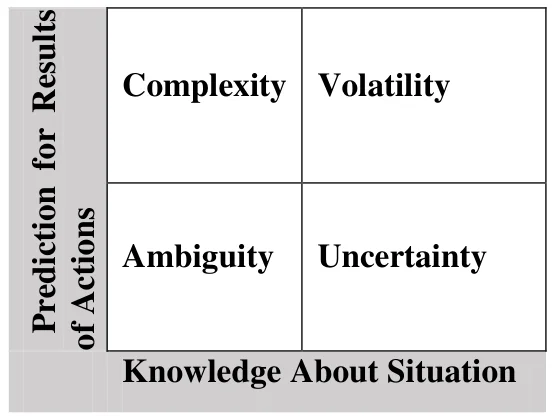
Volatility refers to rapid and significant change occurring over a period of time. If a situation is changing very fast, it is termed as volatile. Uncertainty refers to a situation or an event which is unclear. If some event is new, and nothing much is known about it, we call it uncertain. Due to uncertainty, volatility cannot be explained or predicted. Complexity refers to multiple key decision factors and their interdependence. Complexity may occur with or without uncertainty. If uncertainty and complexity occur together then it becomes very difficult to address a situation. Ambiguity refers to lack of clarity of what actions need to be taken. We may become reasonably certain about the possible factors causing an event and may also understand the complexities of factors involved, but still may not be sure about how to address the situation. To understand more about the VUCA, a framework has been published in Harvard Business Review which consists of two axis that are— how well we know about the situation and how well we can predict the results of our actions [8]. As per this framework, the given four parameters are placed in four quadrants: Ambiguity (lower left quadrant; less knowledge about situation and less predictability of results of actions), Uncertainty (lower right quadrant; reasonable knowledge about the situation, but still low prediction of results of actions), Complexity (upper left quadrant; less knowledge about the situation, but reasonable prediction of results of actions for factors that are known), Volatility (upper right quadrant; reasonable knowledge about situation and reasonable prediction) [9]. Figure 1 represents the four quadrants of the VUCA framework.
Volatility
In this framework, volatility is characterised by an unexpected or unstable event of an unknown duration where knowledge is most often available, but prediction of the results, though feasible, are however challenging. For example, in case of price fluctuation of essential commodities following a natural disaster [10], the approach followed to overcome the challenge will be to have enough stock in hand in the government warehouses and at the same time having regulatory measures to curb stock pileups at the individual levels.
The volatility in COVID-19 context refers to the rapid and unexpected increase of number of cases since the outbreak that occurred in wet markets of Wuhan, China in the first week of December 2019. The rapid surge in cases was accompanied with very less understanding of disease dynamics. Key decisions to effectively contain the spread of the virus were screening, testing, isolation and treatment of the patients [11]. Standard preventive measures in form of personal protective equipment (PPE) kits, masks were recommended in addition to other measures. Huge demand despite limited supply led to panic buying of these protective gears. The Government of India (GoI) took regulatory measures to control the supply of these PPE kits and control the price. In wake of rapid surge when GoI imposed a nation-wide lockdown on 24th March 2020 [12], it resulted in panic buying of essential groceries. However, all state governments made appropriate arrangements to regulate and supply essential commodities at the doorsteps of people.
Uncertainty
Despite having information about the situation or event, the prediction of future results will may be appropriate, this is known as uncertainty. For example, globally many anti-terrorism initiatives have been operational, yet we cannot clearly exactly predict when and where the terrorists spur their attacks. The approach usually followed to overcome uncertainty is to invest in more information at the ground level and share the information with the stakeholders for better prediction about the situation or events [13].
COVID-19 pandemic has also created a situation of uncertainty. All prediction models about disease transmission almost failed [14]. Globally, mechanisms were setup to share the information about the pandemic. Even publication norms were relaxed. Prestigious journals allowed free access of COVID-19 publications and allowed access to the articles even before final decision to publish. Numerous websites and mobile applications have been created a platform to share information. Still, there is a need to share the granular information at the grassroot levels to enable public health practitioners to take appropriate actions. The uncertainty is being dealt by collecting and collating more information at the ground level, and by using time, person and place analysis to understand the nature of the spread of the virus and treatment options to predict the future course of action and strategies to contain the virus [15].
Complexity
Complexity refers to a situation or event that has many interconnected and interlinked components and only some information is available regarding their interaction and interdependence. Prediction of the results here will be an overwhelming process. It is important to consider the complexity of the situation or event before taking any blanket decision [16].
COVID-19 has also presented complex situation. This complexity was linked with ambiguity about the disease dynamics and control measures. Knowledge has changed tremendously about the signs and symptoms of the disease. Initially, the signs and symptoms were confined to respiratory system, however over a period of time evidence emerged that it influences other body systems as well such as the gastrointestinal system [17]. Initially the standing knowledge was that there is no human to human transmission. Later, evidence got established regarding human to human transmission. A lot of debates and theories have also been put forth about the human to human transmission such as— the one stating that only the symptomatic transmit the disease, while another states that even asymptomatic, pre-symptomatic can transmit the disease [18]. The complexity also lies in the incubation period, basic reproduction number, doubling time, secondary attack rate and mortality rate.
To understand the various complexities in COVID-19, many governments formed task forces. In India, Ministry of Health and Family Welfare (MoHFW) and Indian Council of Medical Education and Research (ICMR) formed various task forces by involving different scientists and other key stakeholders in devising the best possible strategies to contain the spread of the virus. Control measures were also complex. How much and what type of restrictions should be imposed? In developed world where population density is less, people are educated and country systems are well developed, compliance to any type of measure is likely— whether a full lockdown or a partial lockdown with preventive measures. However, in developing countries like India, where the population density is high, people are poor and illiterate, and systems are underdeveloped, same lockdown measures are difficult to implement. In urban slums, where 5-10 persons live in single room and many families live in one building, it is impossible to enforce home quarantine and home isolation. All the complexity factors in COVID-19 should be taken into consideration and should include the social and cultural practices among different communities and decision should be taken according to the local needs and demands [19].
Ambiguity
Ambiguity refers to unclear causal relationships with no precedents available, the situation has many “unknown unknowns”, so there will be little prediction about the results. For example, a company moving from print to digital media, in which there is no previous experience with the company. The approach followed to deal with ambiguity will be to experiment, generate the hypothesis and test them in the field for the results achieved [20].
COVID-19 started with a highly ambiguous situation as referred in previous sections. Many countries including well-developed nations were unclear about the imposition of lockdown. There was a dilemma whether a complete or a partial lockdown is needed to curb the spread of the virus. Many countries followed different strategies such as only lockdown, lockdown combined with aggressive testing and tracing of close contacts, restricting air travel, and isolation and quarantine of the suspected cases. Some countries, especially South Korea, Germany and Singapore were successful in containing the spread of the virus by taking various swift actions. In any infectious disease outbreak, taking swift action during the crisis is utmost important in containing the spread. The actions taken may be criticized by people in different sectors, but ultimately the results of the actions are to be considered along with changing the strategy according to the feedback [21]. Experimentation and learning are the recommended strategy in dealing with ambiguous situations. The GoI initiated timely evidence based actions, howsoever ambiguous the evidence may have been. Based on implementation experiences, GoI kept on revising and updating the guidelines.
VUCA is driven by many factors such as globalization, digitalization, global competition, changing markets, demographics, increased online connectedness and consumer needs. In COVID-19, some of these factors such as globalization, increased consumer needs and online connectedness led to spread of the infection, while other factors such as digitalization, improved capacity of health system and big data from research helped in combating the infection.
Examples
Drivers like climate change had both positive and negative impacts. The positive impacts such as reduction in air and water pollution was because of various travel and work restrictions, and lockdowns imposed in different countries which led to closure of many industries and factories, while the negative impact may be due to unsafe disposal of PPE kits in the environment. The global competition and global shift in power is also acting as a driver of VUCA in COVID-19. The demographic pattern of countries affected the mortality rate, especially in Italy and Spain.
The solution to the VUCA world has been developed by using the same acronym (VUCA 2.0) but with a different meaning that is- Vision, Understanding, Clarity and Agility (VUCA 2.0). This means volatility can be overcome by having a clear tangible vision, and making informed choices. In COVID-19 situation, WHO has been issuing various guidelines and advisories frequently, most countries are following WHO’s technical advice to contain the spread of the virus.
Uncertainty can be overcome by having a clear understanding about the situation at hand. In COVID-19, GoI has formed various task forces at the local and national level to help in decision making process. The centre-state relationship has improved over a period of time in joining hands to combat the virus spread. Leadership skills of various politicians, bureaucrats at the local and national level improved during the handling of the crisis.
Complexity can be overcome by having a clarity regarding the situation before taking any actions. In COVID-19, various guidelines, Standard Operating Protocols (SOPs) and clinical protocols have been developed for containing the spread and managing positive cases.
Ambiguity can be overcome by developing a skill of agility, which means taking prompt actions. After the advent of COVID-19, lockdown was imposed much earlier in India, at a time when we had only 500 odd cases. Later, the lockdown was extended in a phased manner to contain the spread of the virus.
Challenges of VUCA in healthcare settings
The challenge in the VUCA world in the current COVID-19 situation is access to healthcare services. Essential and routine health services such as immunization and antenatal care at the primary level were temporarily suspended during the initial phase of lockdown in India. Training of healthcare workers in infection prevention and control measures for COVID-19 is also required. In India, there is already a shortage of healthcare professionals to deliver the health services, the COVID-19 situation made it worse with some healthcare professionals being isolated, some being quarantined, and some who unfortunately lost their lives in this crisis.
The control measures taken to combat the transmission of COVID-19 such as lockdown and restrictions led to job insecurity, mass exodus of migrant labourers to their native places, non-availability of rations through the Public Distribution System (PDS) for the beneficiaries. The other key challenges were stigma towards a particular community, COVID positive persons and people from the different hotspots and containment zones.
Way forward
The way forward in dealing the VUCA is to understand and embrace this concept and believe it as inevitable in the current technology-driven world. New challenges need new and different innovations according to the consumer needs. Converting VUCA challenges into an opportunity needs a transformative role of leadership in human resource management. To deal with VUCA in healthcare settings, the healthcare expenditure has to be increased and new strategies in healthcare management need to be developed. As there is rapid expansion of technology in healthcare settings, every country needs good regulation, and a policy for data security and data protection.
References
- Center UAH and E. Who first originated the term VUCA (Volatility, Uncertainty, Complexity and Ambiguity)? - USAHEC Ask Us a Question [Internet]. [cited 2020 Jul 13]. Available from: https://usawc.libanswers.com/faq/84869
- Staff writer. What you need to lead in the Industry 4.0 [Internet]. 2018 [cited 2020 Jul 18]. Available from: https://www.humanresourcesonline.net/what-you-need-to-lead-in-the-industry-4-0
- Wu Z, McGoogan JM. Characteristics of and Important Lessons from the Coronavirus Disease 2019 (COVID-19) Outbreak in China: Summary of a Report of 72314 Cases from the Chinese Center for Disease Control and Prevention. JAMA [Internet]. 2020 [cited 2020 Mar 30]; Available from: https://pubmed.ncbi.nlm.nih.gov/32091533/
- Modes of transmission of virus causing COVID-19: implications for IPC precaution recommendations [Internet]. [cited 2020 Jun 4]. Available from: https://www.who.int/news-room/commentaries/detail/modes-of-transmission-of-virus-causing-covid-19-implications-for-ipc-precaution-recommendations
- World Health Organization. Coronavirus disease (COVID-19) [Internet]. WHO. 2020 [cited 2020 Jul 17]. p. 1–17. Available from: https://www.who.int/docs/default-source/coronaviruse/situation-reports/20200716-covid-19-sitrep-178.pdf?sfvrsn=28ee165b_2
- Government of India. Covid-19 India. Ministry of Health & Family Welfare, Government of India. 2020. Available from : https://www.mohfw.gov.in [cited 2020 July 17]
- World Health Organization. Coronavirus Disease (COVID-19) Situation Report - 179 [Internet]. 2020 [cited 2020 Jul 18]. p. 1–18. Available from: https://www.who.int/docs/default-source/coronaviruse/situation-reports/20200717-covid-19-sitrep-179.pdf?sfvrsn=2f1599fa_2
- Bennet N LJ. What VUCA Really Means for You [Internet]. [cited 2020 Jul 13]. Available from: https://hbr.org/2014/01/what-vuca-really-means-for-you
- Education C for E. Leading in VUCA world [Internet]. [cited 2020 Jul 17]. Available from: http://www.cee-global.com/vuca/
- Study MG. Volatility, Uncertainty, Complexity and Ambiguity (VUCA) Paradigm for Leadership [Internet]. [cited 2020 Jul 13]. Available from: https://www.managementstudyguide.com/volatility-uncertainty-complexity-ambiguity-paradigm-for-leadership.htm
- Wu YC, Chen CS, Chan YJ. The outbreak of COVID-19: An overview. J Chinese Med Assoc [Internet]. 2020 [cited 2020 Jul 13];83(3):217–20. Available from: /pmc/articles/PMC7153464/?report=abstract [doi:10.1097/jcma.0000000000000270]
- Ministry of home affairs G of I. Guidelines on the measures to be taken by Ministries/Departments of Government of India for containment of COVID-19 [Internet]. New Delhi, India; 2020 [cited 2020 Jul 13]. Available from: https://www.mohfw.gov.in/pdf/Annexure_MHA.pdf
- Meyer P. Leading Through VUCA (Volatility, Uncertainty, Complexity, and Ambiguity) [Internet]. 2013 [cited 2020 Jul 13]. Available from: https://medium.com/@pamelameyerphd/leading-through-vuca-volatility-uncertainty-complexity-and-ambiguity-769088de8815
- Ioannidis JP, Cripps S TM. Forecasting COVID-19 has failed. medRxiv [Internet]. 2020 [cited 2020 Jul 19];114:2020.03.27.20043752. Available from: https://forecasters.org/blog/2020/06/14/forecasting-for-covid-19-has-failed/
- Han Q, Lin Q, Ni Z, You L. Uncertainties about the transmission routes of 2019 novel coronavirus. Influenza Other Respi Viruses [Internet]. 2020 Jul 4 [cited 2020 Jul 13];14(4):470–1. Available from: https://onlinelibrary.wiley.com/doi/abs/10.1111/irv.12735
- Job Wizards. VUCA: how we learn to deal with complexity [Internet]. [cited 2020 Jul 13]. Available from: https://job-wizards.com/en/what-is-vuca-and-why-do-these-four-letters-help-businesses-handle-complexity-better/
- Gu J, Han B WJ. COVID-19: Gastrointestinal Manifestations and Potential Fecal–Oral Transmission. Gastroenterology [Internet]. 2020 May 1 [cited 2020 Jul 19];158(6):1518–9. Available from: https://www.ncbi.nlm.nih.gov/pmc/articles/PMC7130192/
- OECD. Testing for COVID-19: A way to lift confinement restrictions [Internet]. 2020 [cited 2020 Jul 19]. p. 1–21. Available from: https://www.oecd.org/coronavirus/policy-responses/testing-for-covid-19-a-way-to-lift-confinement-restrictions-89756248/
- Lathika A, Mph R, Thakarakkattil A, Nair Mph N, Nangia Msc C, Kumar Chourasia P, et al. Epidemic Landscape and Forecasting of SARS-CoV-2 in India [Internet]. 2020 [cited 2020 Jul 13]. Available from: https://doi.org/10.1101/2020.04.14.20065151
- CA Study IM 1. Risk Management [Internet]. [cited 2020 Jul 13]. 221 p. Available from: https://castudyweb.com/wp-content/uploads/2019/05/ICAI-Module-1.pdf
- Ng Y, Li Z, Chua YX, Chaw WL, Zhao Z, Er B, et al. Evaluation of the effectiveness of surveillance and containment measures for the first 100 patients with COVID-19 in Singapore - January 2-February 29, 2020. Morb Mortal Wkly Rep [Internet]. 2020 Mar 20 [cited 2020 Jul 13];69(11):307–11. Available from: https://www.cdc.gov/mmwr/volumes/69/wr/mm6911e1.htm

Published
Article metrics
- Views
- 6,743
- Downloads
- 5,857
Based on this site's usage statistics.