Policy Debate Vol. 7 No. 2 (2023): International J Health Systems and Implementation Research
Need to move from WHO’s Health Systems Framework to Health Outcome Framework for Sustainable Improvement in Health
Health Systems Framework to Health Outcome Framework
Downloads
Topics
Keywords:
- Health System Framework
- Health Outcome Framework
- Sustainable Improvement
Abstract
The WHO health System Framework has been used since 2007. Though useful in assessing and measuring the six building blocks of health systems and progress over a period of time in a country and comparing with other countries. However, it does not capture patients, families and communities who are the most important stakeholders in health care. It does not take into account the social determinants of health. There is a need to adopt a health outcome framework which addresses all social determinants of health including beneficiaries, their families and community in addition to the health system. The families are the most important players in health as it is family and community where health is ‘produced’ and often diseases start there. The beneficiaries approach health system when their health breaks down and for some preventive services. The authors propose a health outcome framework adapted from World Bank’s health outcome framework. The proposed framework with inclusion of family and community level aspects and social determinants of health is needed. It is more comprehensive as it also includes the building blocks of WHO’s current health systems framework. The authors recommend health outcome framework for use in place of WHO’s health system framework to address all the determinants of health to improve health outcome in a population.
Full text
This web version was prepared from the published PDF, which is the version of record. Please cite and quote from the PDF.
Introduction
The World Health Organization (WHO) introduced the Health Systems Building Blocks in 2007. The primary objective was to foster a shared comprehension of the health system and its elements that contribute to enhancing health systems[1]. The WHO Health Systems Framework (HSF) lacks a comprehensive approach to addressing health, as it solely focuses on the health system. Consequently, it is structured around a supply-oriented model that covers service delivery intricacies and largely disregards elements related to the demand side [2]. Corona Virus Disease 2019 (COVID-19) pandemic has also raised serious questions about established approaches to look at health systems. Global Health Security Index, 2019 ranked the US 1st, Australia 2nd, Canada 4th, South Korea 9th, China 52nd, India 66th, and African countries at the bottom[3]. However, the US and UK provided among the worst responses to the COVID-19 pandemic in the world [4]. Critics argue that it does not sufficiently consider the diverse contexts and unique needs of different countries.
This paper looks at the need to replace WHO Health System Framework with a health outcome framework to comprehensively address the health needs of a population by incorporating the role of family and community and social determinants of health to achieve sustainable Universal Health Coverage. The framework also lacks attention to social determinants of health neglecting the broader social, economic, and cultural factors influencing health outcomes [5]. The paper raises concerns about the framework's ability to foster sustainable improvements in health. Addressing the inadequacies of WHO HSF, the paper proposes a Health Outcome Framework adding family and community, other sectors to include Social Determinants of Health and Private sector in the framework.
WHO Framework
The WHO framework (Figure 1) provides a valuable template to assess and strengthen six blocks in the health systems across countries [1] and to monitor progress in a country over a period of time. Essential components of the healthcare system encompass the health workforce and health financing, both of which contribute to the provision of quality healthcare services. Furthermore, certain overarching elements within the healthcare system framework, such as leadership, health information, and research, aid policymakers in formulating policies and regulatory frameworks[5].
This framework offers guidance on how these six components perform to achieve the health goals by improving access, coverage, quality, and safety of health services. It has very little focus on how these components can be interlinked for operational strategies that are successful in improving their performance [1,6]. The framework has no mention of how community efforts can lead to big changes in health status [5]. Actions in areas other than health i.e. social determinants of health are needed to ensure sustainable improvement in health[7].
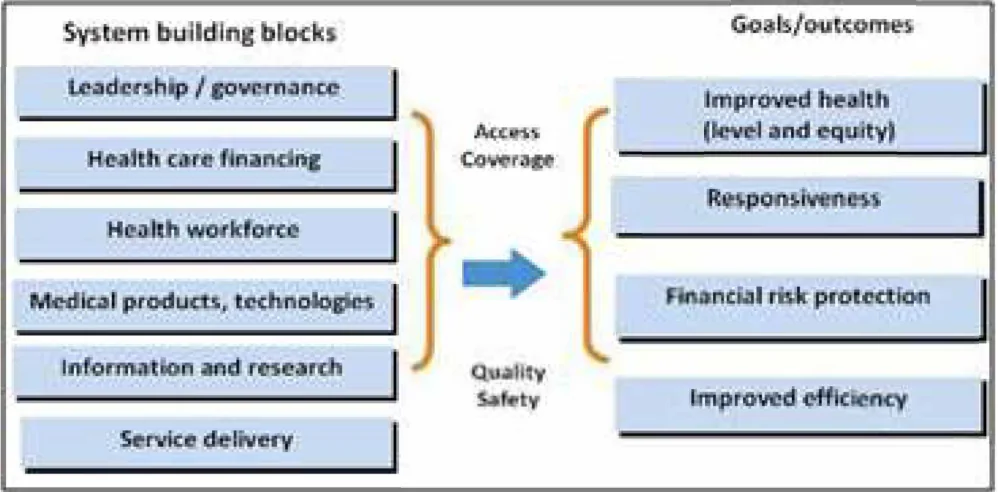
The WHO framework entails systems building blocks with goals and outcomes. The cross-cutting components like health care financing, health workforce, and service delivery act as catalysts to improve the health outcome; however other key factors that influence health behaviour or healthcare-seeking behaviour are neglected.[8] Thus, it is important to include family and community behaviour in the health systems framework. The health system cannot reach out to the masses until communities start using the services offered by the health system.[8] The framework needs to be revised to include the health practices of the community at individual and family levels[9]. Thus, the health system also needs to include and understand the local context in terms of local practices, remedies and socio-cultural facilitators and barriers that influence the use of health services offered by the health facilities[5].
Inadequacies in the WHO Health Systems Framework
The WHO HSF has several inadequacies. These include:
a. Inadequacy : Population needs, not addressed
The needs of the population are not addressed in a comprehensive manner in the current framework. An example of Non-Communicable Disease is described below.
India, as many other countries, has witnessed a rapid change in morbidity and mortality patterns over the years. There has been a substantial decline in maternal and child mortality and an increase in life expectancy. Non-communicable Diseases have emerged as the main cause of morbidity and mortality [10]. The premature loss of life, measured in terms of years of life lost due to cardiovascular diseases in India, surged by 59%, rising from 23.2 million in 1990 to 37 million in 2010 [10, 12]. The reported prevalence of high blood pressure among India's adult population in 2008 was 32.5%, with 33.2% among males and 31.7% among females, as documented by WHO in 2011[12].
The older population aged 60 and above, who also have underlying health issues related to non-communicable diseases (NCDs), are at an increased risk of experiencing complications when faced with communicable diseases[10]. This vulnerability was evident during the recent COVID-19 pandemic. The existing healthcare infrastructure and strategies, which were primarily developed to address maternal and child health, nutrition, and communicable diseases, are not adequately equipped to handle the complexities arising from the intersection of communicable and noncommunicable diseases [1, 11].
Need for inclusion of the whole population approach to health in the Framework
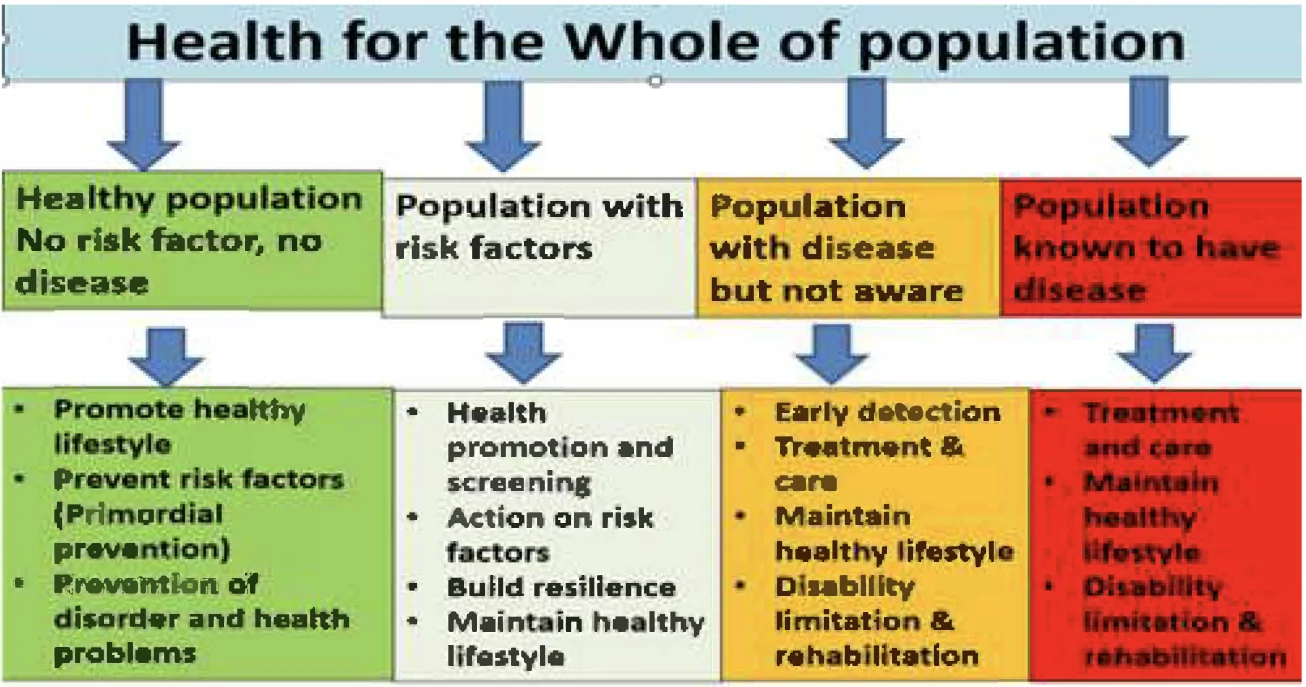
To address the increasing burden of NCDs we need an approach that addresses the needs of the whole population and action across sectors beyond health. The population in any community can be divided into four groups namely- people who are healthy, people with risk factors, people with disease but not aware, and people with known disease (Fig. 2). Each one of these four groups needs appropriate interventions to reduce incidence of morbidity and reduce mortality and improving overall health outcomes[12,13]. Therefore, it is crucial to include the whole-population approach to improve overall health outcomes including prevention. The current framework does not address this reality.
b. Inadequacy: Role of Family is not taken into account
The Alma Ata declaration and the “Health for All” approach reflected the commitment of countries including India, to cater to the health needs of the whole population irrespective of their economic status, gender, and caste[15]. Yet the Primary Health Care approach vital to the human rights strategy, through public participation, was lost sight of in the current WHO HSF[15]. The family is critical in maintaining health, and more so for health promotion and prevention. As in the agriculture sector, the farmers produce food grains, oil seeds, fruits, vegetables, etc. and the government supports with irrigation, electricity, improved seeds, fertilizers, markets, etc. as inputs. Similarly, health is produced in the families which are the cradle for adoption and sustenance of desirable behaviour[16]. The government should ensure the availability of safe water, sanitation, hygiene, clean air, availability of services at health facilities. The families as producers of health are overlooked in the WHO HSF [17].
The importance of the role of the family is given in Table 1 with an example of hypertension
Family level – Eating habits, health-seeking behaviour and physical activities are practiced at the family level. The treatment compliance, early identification of complications and timely self-referral when required are also implemented at the family level. Studies suggest that the role of family and its level of involvement within health care has a strong association with the use of health services[18].
Community level – The value of health care can be improved by the community's capacity to contribute to the planning and delivery of health services. Opportunities provided to communities to plan and manage healthcare results in improving accountability, transparency and improve service utilization [19].
| Family level (1) | Community level (2) | Primary care level (3) | Secondary & Tertiary care level (4) | Other sectors/ departments (5) |
|---|---|---|---|---|
| Physical activities, healthy food, No tobacco use, alcohol intake, ) Treatment compliance, early Identification of complications and timely self-referral | (1) Plus Educate community for prevention & home care Follow-up of patients | (2) Plus Diagnose, prescribe treatment Identify and refer complications and Counselling | (3)Plus, appropriate management of referred cases | Promotion of desirable behaviour through educational institutions, industry etc. Regulation of food processing industries; Health promotion by Ministry of I&B, Department of pharmaceuticals, Medical devices; Pharmaco-vigilance under Central Drugs Standard Control Organization |
Role of Primary Healthcare Functionaries – The primary care plays a vital role in keeping people healthy and in diagnosis, treatment compliance, referral, and counselling of those with disease. The enhanced use of comprehensive primary-level care can also cut down health expenditures significantly [20]. The early diagnosis and referral can help in detecting disease conditions at an early stage and increase the chances of cure, and survival, and reduce the cost of treatment. The Comprehensive primary health care framework under Ayushman Bharat provides an expanded range of services that are delivered closer to people at the Health and Wellness Centre [21]. The HSF also needs to clearly spell out the detailed role of family and community [22].
c. Inadequacy: Social Determinants of Health not considered in the existing framework
The WHO HSF needs to include the other ministries to improve health outcomes as many factors influencing health outcomes are outside the control of the health ministry[19]. Kerala has involved other ministries to improve health outcomes by putting money into improving health education and primary care in other sectors[23]. There is a need to invest more in upstream determinants of health and not just curative care through the health system based on the current WHO HSF. The inclusion of determinants of health will make improvements in health and make it cost-effective and sustainable.
The SDGs offer an opportunity to address social determinants of health to achieve lasting and sustained improvement in health. The SDGs can be divided into three groups; environmental goals, poverty goals, inequality, and peace-related goals to comprehensively address all social determinants of health as shown in Fig.3.
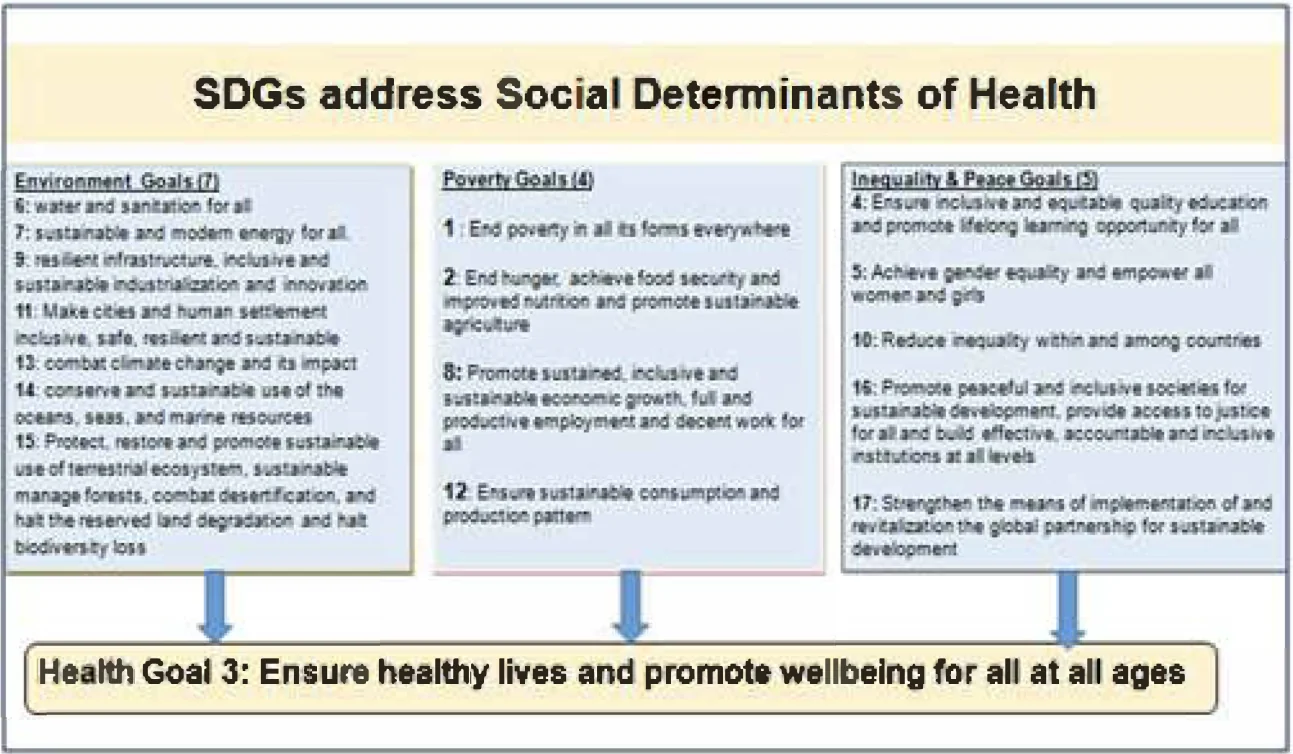
Environmental factors are key contributors to health that are reflected under environmental goals in SDGs[24]. Similarly, poverty and poor nutrition also have consequences on the health and overall well-being of people of all age groups. Thus, there is a need to incorporate these social determinants of health in the health framework[25]. The purpose of the health system is to serve the community and improve their health through preventive and curative interventions and address social determinants of health. The community must be at the centre as the most important stakeholder in health care.
Proposed Health Outcome Framework
The WHO HSF serves a useful purpose; a more comprehensive framework to holistically address health outcomes is required. It should include the role of individuals, families, communities and address social determinants of health to achieve sustainable progress in health and address inequity.
The proposed health outcome framework has five pillars, encompassing major players that significantly contribute to health, including family and community (Fig 4).
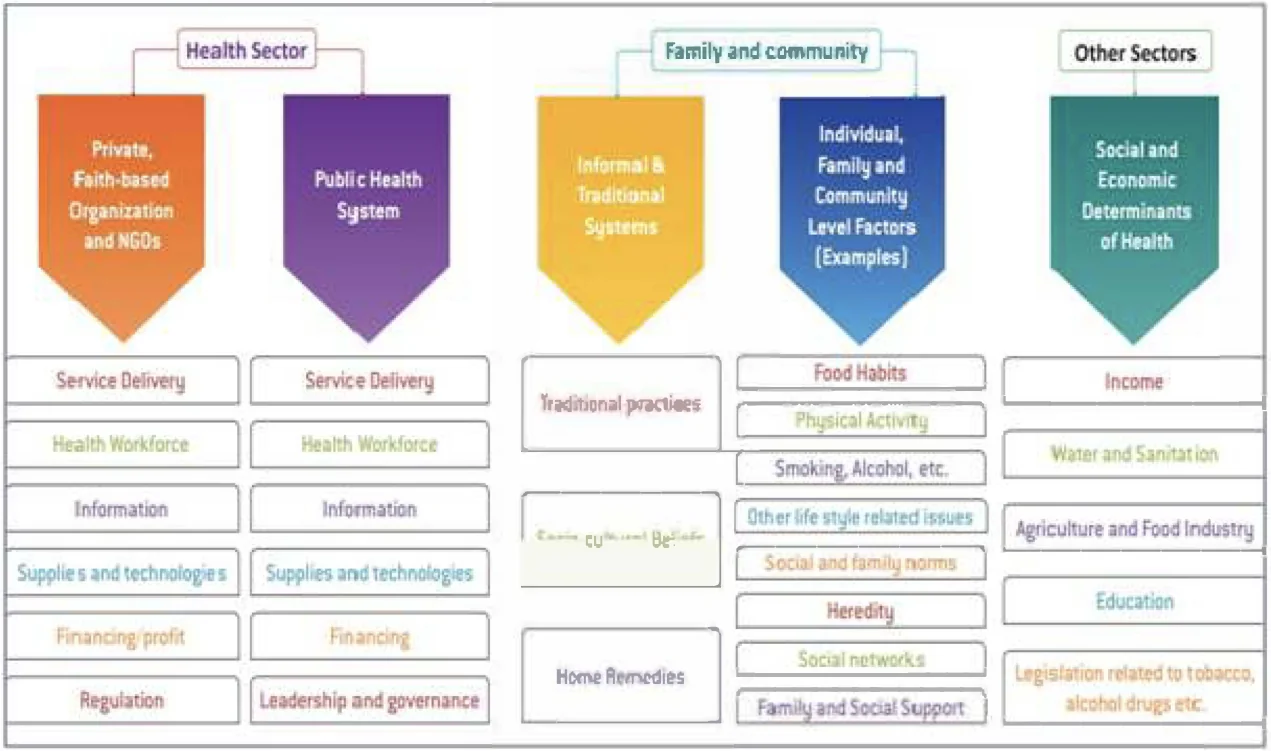
The first pillar is private, faith-based organizations, and healthcare-related NGOs, recognizing their substantial role in healthcare. Private healthcare, which accounts for over 50% of healthcare services in Sub-Saharan Africa and more than 80% in Asia are driving force for innovation in health care. This highlights the need for governance, regulation, and partnerships to address issues related to accountability, quality, and participation in public health activities[26].
The second pillar of the public health sector, addresses service delivery, the healthcare workforce, information management, supplies and technology, financing, and leadership and governance in the government-run healthcare.
The third pillar incorporates the vital aspects of family and community, acknowledging the importance of traditional practices and socio-cultural beliefs that influence health care at home and healthcare-seeking behaviour. These community level practices significantly shape individual's health, especially concerning NCDs. Social and family norms play a substantial role in an individual's health, and socioeconomic factors like income and education influence decision-making within families[27].
The fifth pillar includes sectors with a substantial impact on health, including income, water and sanitation, agriculture and the food industry, education, and legislation and government regulations such as those related to tobacco and alcohol.
These five pillars capture all vital factors in the healthcare ecosystem, which significantly influence health outcomes[28]. This framework is designed to comprehensively address determinants of health including the health system.
Conclusion
The WHO health system framework is a valuable tool for assessing and monitoring the progress of a country's health systems and making cross-country comparisons. However, it has limitations in addressing all the factors that influence health, especially in the face of rapidly changing global dynamics, evolving disease patterns, and the emergence of new diseases. Therefore, there is a pressing need to adopt a health outcome framework that encompasses all determinants of health, including those related to families and communities.
In light of this, the authors recommend the adoption of a health outcome framework which provides a more comprehensive approach. This proposed framework integrates elements at the family and community levels, along with social determinants of health. In doing so, it also includes the foundational building blocks outlined in the WHO health systems framework. It is suggested that the health outcome framework, rather than the WHO's health system framework, should be used to cover all determinants of health, ultimately enhancing overall population health outcomes.
References
- World Health Organization. Everybody's business: strengthening health systems to improve health outcomes. Geneva: WHO; 2007 [Google Scholar]
- Commission on Social Determinants of Health. Closing the gap in a generation: health equity through action on the social determinants of health. Geneva: World Health Organization; 2008. [Google Scholar]
- Nuclear Threat Initiative, Johns Hopkins Center for Health Security, The Economist Intelligence Unit. Global Health Security Index. Available from:https (Accessed September 29th, 2023). [Google Scholar]
- Dalglish SL. COVID-19 gives the lie to global health experts. Lancet. 2020 Apr 11;395(10231):1189. doi: 10.1016/S0140-6736(20)30739-X. Epub 2020 Mar 26. PMID: 32222159; PMCID: PMC7194526.
- World Health Organization. The world health report 2000: health systems: improving performance. Geneva: WHO; 2000. [Google Scholar]
- Berman, Peter; Bitran, Ricardo. 2011. Health Systems Analysis for Better Health System Strengthening. Health, Nutrition, and Population (HNP) discussion paper; World Bank. © World Bank. https://openknowledge.worldbank.org/handle/10986/13593 License: CC BY 3.0 IGO.
- Murray CJ, Frenk J. A framework for assessing the performance of health systems. Bull World Health Organ. 2000;78(6):717-31 [Google Scholar]
- Commission on Social Determinants of Health. Closing the gap in a generation: health equity through action on the social determinants of health. Geneva: World Health Organization; 2008. [Google Scholar]
- Kleczkowski BM, Roemer MI, Van Der Werff A. National health systems and their reorientation towards health for all. Geneva: World Health Organization; 1984. [Google Scholar]
- Srivastava RK, Bachani D, Burden of NCDs, policies and programs for prevention and control of Non-communicable Diseases in India. Indian J Community Med 2011; 36:7-12. [Google Scholar]
- Haileamlak A. The Impact of COVID-19 on Non-Communicable Diseases. Ethiop J Health Sci. 2022 Jan;32(1):1-2. DOI: 10.4314/ejhs.v32i1.1. PMID: 35250211; PMCID: PMC8864391.
- NCD Risk Factor Collaboration (NCD-RisC)Worldwide trends in blood pressure from 1975 to 2015: a pooled analysis of 1479 population-based measurement studies with 19·1 million participants. Lancet 2017; 389:37-55.doi:10.1016/S0140-6736(16)319195pmid:http://www.ncbi.nlm.nih.gov/pubmed/27863813
- Bennett JE, Stevens GA, Mathers CD, et al Ncd countdown 2030: worldwide trends in non-communicable disease mortality and progress towards sustainable development goal target 3.4. The Lancet 2018;392:1072-88.doi:10.1016/S0140-6736(18)31992-5
- Kumar S, Preetha G. Health Promotions: An Effective Tool for Global Health. Indian J of Community Med. 2012: 37; 5-12 [Google Scholar]
- Pandey KR. From health for all to universal health coverage: Alma Ata is still relevant. Glob Health. 2018;14; doi:10.1186/s12992-018-0381-6
- Haldane V, Chuah FLH, Srivastava A, Singh SR, Koh GCH, Seng CK, Legido-Quigley H. Community participation in health services development, implementation, and evaluation: A systematic review of empowerment, health, community, and process outcomes. PLoS One. 2019 May 10;14(5):e0216112. doi: 10.1371/journal.pone.0216112. PMID: 31075120; PMCID: PMC6510456.
- Rosland A.-M., Heisler M., Choi H.-J., Silveira M. J., Piette J. D. Family influences on self-management among functionally independent adults with diabetes or heart failure: do family members hinder as much as they help? Chronic Illness. 2010;6(1):22-33. [doi:10.1177/1742395309354608]
- Kumar S, Bhardwaj P, Kumar N. Need to Bring Family to the Heart of Healthcare as it is Home, not a Hospital, Where Healthcare Begins and Ends. Indian J Community Med. 2023 Mar-Apr;48(2):209-213 [doi:10.4103/ijcm.ijcm_95_23]
- WHO. The World Health Report 2008. Primary health care - Now more than ever. Geneva: WHO; 2008. Available from: http://www.who.int/whr/2008/en/index.html
- WHO. Community involvement in tuberculosis care and prevention. Geneva: WHO; 2008. Available from: http://whqlibdoc.who.int/publications/2008/9789241596404_eng.pdf.
- Operational Guidelines on Ayushman Bharat, Comprehensive Primary Health Care through Health and Wellness centre, NHSRC, 2018. [Google Scholar]
- Lakshminarayanan S. Role of government in public health: current scenario in India and future scope. J Family and Community Medicine. 2011;18(1):26. [doi:10.4103/1319-1683.78635]
- Woolf SH, Aron L, editors. U.S. Health in International Perspective: Shorter Lives, Poorer Health. National Research Council (US); Institute of Medicine (US); Washington (DC): National Academies Press (US); 2013. 7, Physical and Social Environmental Factors. Available from: https://www.ncbi.nlm.nih.gov/books/NBK154491/
- F Racioppi, M Martuzzi, S Mati?, M Braubach, G Morris, M Krzy?anowski, D Jarosi?ska, O Schmoll, D Adamonyt?, Reaching the sustainable development goals through healthy environments: are we on track?, European Journal of Public Health, Volume 30, Issue Supplement_1, March 2020, Pages i14-i18, https://doi.org/10.1093/eurpub/ckaa028
- A report on Hunger & Health: Impact of Poverty, Food Insecurity, and Poor Nutrition, Food Research & Action Center © December 2017 Available on: https://frac.org/wp-content/uploads/hunger-health-impact-poverty-food-insecurity-health-well-being.pdf
- The private sector in health, https://healthsystemsglobal.org/thematic-groups/the-private-sector/, Accessed on 5th October, 2023.
- Kumar S, Bhardwaj P, Kumar N. Need to Bring Family to the Heart of Healthcare as it is Home, not a Hospital, Where Healthcare Begins and Ends. Indian J Community Med. 2023 Mar-Apr;48 (2):209-213. [doi:10.4103/ijcm.ijcm_95_23]
- The Health Outcome Framework. Available at https://drsanjivkumar.files.wordpress.com/2012/04/figure-2.jpg Accessed on 8th September 2023.


Published
Article metrics
- Views
- 1,110
- Downloads
- 523
Based on this site's usage statistics.