Case Studies Vol. 9 No. 2 (2025): International Journal of Health Systems and Implementation Research
Food Safety, Sanitation and Hygiene: Lessons from a Hepatitis-A Outbreak in Rural India
Downloads
Topics
Keywords:
- Food safety, Hand Hygiene, Hepatitis-A, Outbreak, Water contamination
Abstract
Introduction: Hepatitis-A is a vaccine-preventable viral infection primarily transmitted through the faecal-oral route. In October 2023, a Hepatitis-A outbreak was investigated in South West Khasi Hills District, Meghalaya. Objective: The study was carried out to identify risk factors of the disease. Methodology: A descriptive epidemiological study was conducted using surveillance data, household surveys, laboratory testing, and environmental assessments. Results: Fifteen suspected cases were identified, with five (33%) laboratory-confirmed, predominantly affecting young children (median age: 5 years). The outbreak was linked to multiple risk factors, including consumption of contaminated drinking water, inadequate sanitation, poor hand hygiene (85.6% of affected individuals did not use soap), open defecation (13.3%), and consumption of unregulated packaged fruit juice. Water samples from the village’s main drinking source revealed coliform contamination, confirming unsafe water supply as a key contributor. Despite a 13.3% hospitalization rate, all cases fully recovered, and no fatalities were recorded. Conclusion: The findings of the study highlight the critical role of water sanitation, hand hygiene, and implementation of food safety regulation. Study emphasizes on enhancing water quality monitoring at least twice in a year (pre & post monsoon) and whenever needed by public health engineering department in coordination with health authorities, Mass awareness about hand hygiene and strict implementation of FSSAI regulations to prevent future outbreaks.
Full text
This web version was prepared from the published PDF, which is the version of record. Please cite and quote from the PDF.
Introduction
Hepatitis- A outbreaks remain a persistent public health concern, especially in areas with inadequate sanitation and limited access to clean drinking water. The disease, which spreads through feco-oral transmission, can lead to severe illness, particularly among young children and vulnerable populations [1]. In October 2023, a Hepatitis- A outbreak was reported in the South West Khasi Hills (SWKH) District, Meghalaya, underscoring the urgent need for effective disease control measures. Most part of India have high endemicity to Hepatitis- A [2]. The Global Burden of Disease study estimated that Acute Hepatitis- A infections increased by 4.2% between 2005 and 2015 (from 109.6 to 114.2 million cases) [3].
Current strategies to prevent Hepatitis- A outbreaks include improved sanitation, access to clean water, public health education, and vaccination programmes [3]. Various Interventions, such as the chlorination of water supplies, the promotion of hand hygiene, and enhancements to sewage systems, have been implemented across different settings to curb the spread of the disease.
Among the existing solutions, vaccination against Hepatitis-A has proven to be the most effective long-term measure for preventing outbreaks [1]. Alongside safe drinking water programmes and hygiene education, vaccination offers comprehensive protection against the virus, especially in high-risk areas. Despite the effectiveness of these measures, there are challenges in implementation. Rural regions, such as the South-West Khasi Hills District, often encounter limited healthcare resources, inadequate sanitation infrastructure, and poor vaccine coverage.
Furthermore, behavioural factors, including reluctance to boil drinking water or lack of awareness about hygiene practices, contribute to ongoing transmission risks [4]. This investigation successfully identified the primary risk factors contributing to the outbreak, such as contaminated water sources and poor hygiene practices. Immediate public health interventions, including water purification measures, community education, and policy recommendations, were enacted to mitigate further transmission. The study provides valuable insights that can guide future prevention strategies and enhance public health preparedness in similar rural settings.
Materials and Methods
Study Place
The study was conducted in Mawkohphet village in the South West Khasi Hills District of Meghalaya (Figures 1 and 2). This rural village relies on community water sources, including open wells and shared taps, making it vulnerable to outbreaks of waterborne diseases. The population predominantly comprises indigenous communities, and access to healthcare facilities and sanitation infrastructure is limited.
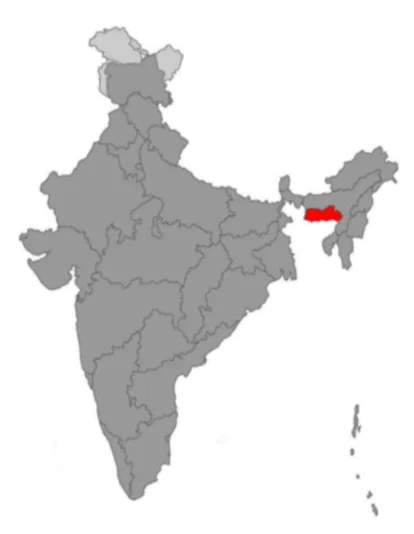
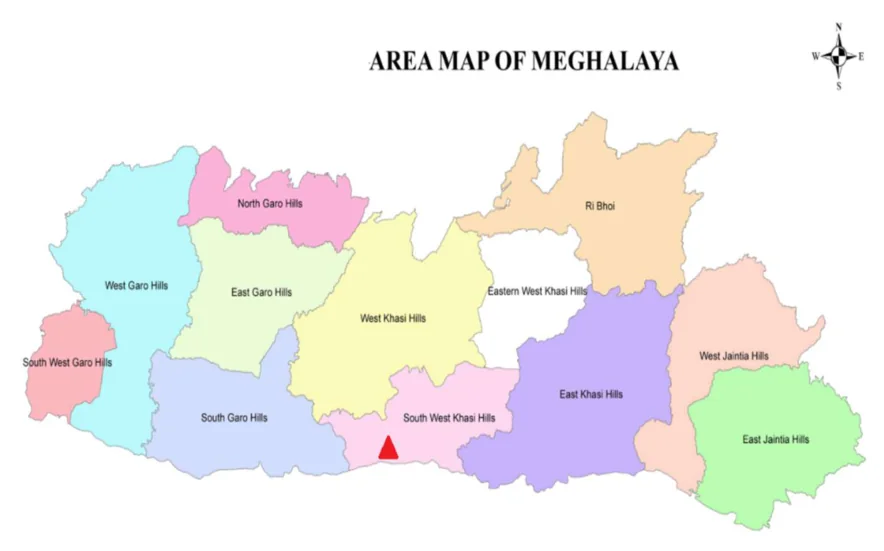
The Auxiliary Nursing Midwife (ANM) and Accredited Social Health Activist (ASHA) investigated on the initial reports of increasing number of jaundice cases in Mawkohphet village and identified 3 cases of jaundice. Tgurehe District Medical and Health Officer and the District Surveillance Unit initiated an outbreak investigation. The outbreak was confirmed as there were no Hepatitis- A cases in the last three years.
Exclusion and Inclusion Criteria
Case Definition
The following Case definitions were used:
- Suspect case: yellowing of the eyes or skin (Jaundice) along with fever and vomiting, in any individual residing in Mawkohphet village since 1/8/2023 [6]. Case definition under Integrated Disease Surveillance Programme (IDSP) was modified and made simple to pick up a greater number of cases from the community by the field level health workers.
- Confirmed case: Any suspect tested positive for Hepatitis- A by Enzyme-Linked Immunosorbent Assay (ELISA) on serum sample [7].
- Unregulated fruit juice: Packed fruit juice without any labelling that doesn’t adhere to Food Safety And Standards (Labelling And Display) Regulations, 2020 [8].
Methods
Active case finding was performed through house-to-house surveys to identify suspected cases. Health workers and community volunteers visited households within the affected area, documenting individuals exhibiting jaundice, fever, nausea, and other relevant symptoms. Structured questionnaire-based interviews were conducted with affected individuals and their households. The questionnaire captured data on demographics, symptom onset, water consumption habits, sanitation practices, and contact with known cases. This information was crucial in identifying behavioural and environmental factors that contributed to the spread of Hepatitis- A.
This proactive approach ensured the detection of cases that might not have been reported through routine surveillance. Serological confirmation of Hepatitis- A cases was conducted using IgM anti-HAV ELISA [7]. Blood samples were collected from suspected cases and analysed at the regional public health laboratory.
A comprehensive review of surveillance data was undertaken by analysing reports from local healthcare facilities and the IDSP. Patient records and notification reports were examined to track the outbreak's progression, identify case clusters, and verify the accuracy of reported cases.
An environmental assessment was conducted to identify potential sources of contamination. Investigators inspected water sources, including community wells and household storage tanks, to assess water safety. Hygiene practices such as handwashing, sanitation conditions, and waste disposal methods were also evaluated to determine environmental risk factors contributing to the outbreak. Water samples from common drinking sources were also tested for microbial contamination, specifically coliform bacteria, to assess potential waterborne transmission.
Statistical Analysis
Descriptive statistics were employed to summarise epidemiological data, including age distribution, attack rates, and symptom prevalence. Analysis was conducted to determine risk factors associated with infection. Temporal trends were analysed to assess outbreak progression, and geospatial mapping was performed to identify high-risk areas. Data was collected using Epi Info software and analysis was done using Microsoft Excel.
Results
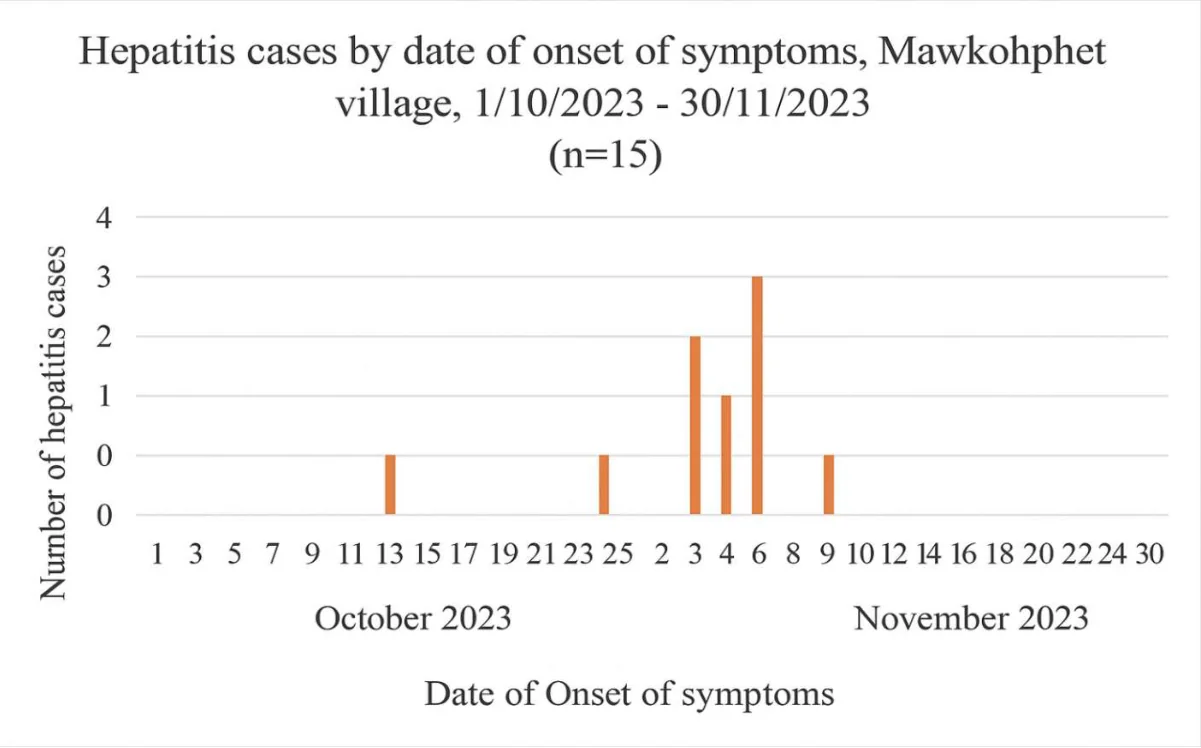
A total of 15 suspected cases were identified, with 5 (33%) laboratory-confirmed cases (Table 1). The median age of affected individuals was 5 years (range: 0.3–8 years), and 53% of cases were female, suggesting a slightly higher prevalence among females. Two cases (13.3%) required hospitalization, but no deaths were reported. All affected individuals fully recovered. The attack rate was calculated at 2.4% highlighting their vulnerability of children to Hepatitis- A infection. The Epi curve (Figure 3) presents the initiation of the outbreak and the spread. All 15 cases occurred in children under the age of 10 with highest incidence rate in the 6–10-year age group (Table 2).
| S.no. | Characteristic | Frequency |
|---|---|---|
| 1 | Total cases | 15 (100%) |
| 2 | Laboratory-confirmed | 5 (33%) |
| 3 | Median age (years) | 5 (2-8) |
| 4 | Female cases | 8 (53%) |
| 5 | Hospitalized | 2 (13.3%) |
| 6 | Recovered | 15 (100%) |
| Age group (years) | Incidence rate per 1000 population (Males) | Incidence rate per 1000 population (Females) | Overall Incidence rate per 1000 population |
|---|---|---|---|
| 0-3 | 29.9 | 7.5 | 18.7 |
| 3-6 | 7.5 | 22.6 | 15.0 |
| 6-10 | 14.9 | 30.1 | 22.5 |
| Total | 52.2 | 60.2 | 56.2 |
Environmental and laboratory findings
The environmental and laboratory findings reveal significant concerns regarding the transmission of Hepatitis- A in the affected community.
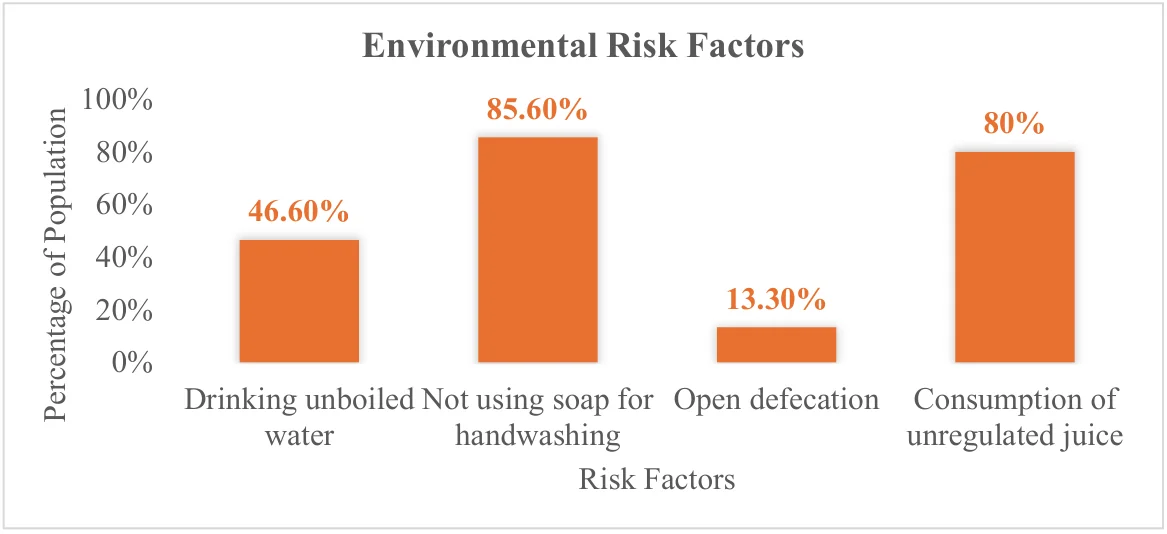
All affected households (100%) relied on a common open water source, which was identified as a key contributor to the outbreak. Additionally, 46.6% of households reported drinking un-boiled water, further increasing their risk of infection. Hygiene practices were found to be poor, with 85.6% of affected individuals not using soap for handwashing, which likely facilitated person-to-person transmission. Open defecation was reported in 13.3% of cases, indicating inadequate sanitation facilities in the community. Another notable finding was that 80% of affected children had consumed packed fruit juice, which was not adherent as per Food Safty and Standards Authority of India (FSSAI) regulations and lacked proper labelling and display of essential information, could have been a potential source of contamination (Figure 4). Laboratory analysis of water samples from the main village tank showed coliform contamination beyond permissible levels, confirming the presence of unsafe drinking water and supporting the hypothesis that waterborne transmission played a significant role in the outbreak.
The presence of contaminated drinking water, poor hand hygiene, and consumption of potentially unsafe food products were significant contributors to the outbreak. Individuals consuming un-boiled water had a higher likelihood of infection. Additionally, the lack of proper handwashing practices further facilitated disease spread within the community.
Discussion
The investigation confirmed the existence of the Hepatitis- A outbreak in South West Khasi Hills District, characterized the epidemiology of the affected population, and identified critical risk factors such as reliance on a contaminated water source, poor sanitation, and inadequate hygiene practices. The findings support the need for targeted public health interventions, including improved water quality monitoring and sanitation infrastructure, as recommended in the study's objectives. The study findings are consistent with prior research on Hepatitis- A outbreaks in similar rural and resource-limited settings [4]. Numerous studies have demonstrated that poor water quality, lack of proper sanitation, and inadequate hygiene contribute to the transmission of Hepatitis- A [9]. Outbreaks in other regions have shown similar attack rates among young children, reinforcing the vulnerability of this age group to waterborne diseases. The association between consumption of contaminated beverages and Hepatitis- A infections has also been documented in prior investigations, emphasizing the need for strict food safety regulations [10].
Investigations into the long-term immunity status of affected individuals and the effectiveness of community-wide vaccination campaigns could provide valuable insights for future outbreak prevention. Additionally, a comprehensive assessment of water quality trends in the region over time would help identify persistent contamination risks. Studies examining behavioural factors influencing hygiene practices and the effectiveness of public health messaging in rural communities could guide more targeted health promotion efforts. Lastly, evaluating the economic and social impact of Hepatitis- A outbreaks on affected populations could further inform public health policies and resource allocation strategies.
Improving water quality through chlorination and regular disinfection of community water sources is essential to reduce the risk of future outbreaks. Ensuring proper water treatment and distribution will help mitigate the contamination risks identified in the affected village. Alongside water quality improvements, community awareness campaigns should be conducted to educate residents on essential hygiene practices, such as proper handwashing and safe food handling. These campaigns can significantly reduce the spread of Hepatitis- A and other waterborne diseases. A vaccination drive targeting at-risk populations, including children and those in areas with recurrent water contamination issues, is crucial in preventing future cases. Implementing a comprehensive vaccination strategy can serve as a long-term solution to Hepatitis-A prevention. Additionally, policy recommendations should focus on strengthening public health infrastructure and integrating Hepatitis-A surveillance into routine disease monitoring. Improved collaboration between health agencies and local authorities will ensure better response mechanisms and prevent similar outbreaks in the future.
Conclusion
The Hepatitis- A outbreak in Mawkohphet village highlights the critical role of water sanitation, hand hygiene, and implementation of food safety regulation. The findings emphasize the importance of sustained public health interventions, including improved water quality management, stricter food safety regulations, and targeted hand hygiene awareness program in the community. vaccination programs. Furthermore, enhancing surveillance systems for early outbreak detection and response is crucial. Strengthening multi-sectoral collaboration among health authorities, food and water safety departments along with community stakeholders is essential for establishing a comprehensive and sustainable public health strategy to prevent the future outbreaks.
Recommendations
Strengthening water quality monitoring and surveillance by public health engineering department in collaboration with health authorities under Jal Jeevan Mission and National Programme on Climate Change and Human Health may be initiated on regular basis to prevent future outbreaks. Mass awareness about hand hygiene in the community and schools involving Rashtriya Bal Swasthya Karyakram (RBSK) teams and during Village Health and Nutrition Days (VHNDs) is crucial. Strict implementation of FSSAI regulations through regular testing and random inspection visits are essential to ensure food borne outbreaks in future.
Ethical approval
The study involved only pre- identified secondary data with no direct involvement of human participants.
Conflict of Interest
None Declared
Acknowledgement
The authors would like to thank the support provided by the Meghalaya State IDSP team and the ASHAs and ANMs of the study area.
Source of funding
Authors received no external funding to conduct the study.
References
- Hepatitis- A [Internet]. Geneva: World Health Organization; c2024 [cited 2025 May 6]. Available from: https://www.who.int/news-room/fact-sheets/detail/hepatitis-a
- Factsheet-a-hepatitisday2016.pdf [Internet]. Geneva: World Health Organization; c2016 [cited 2025 May 6]. Available from: https://cdn.who.int/media/docs/default-source/searo/india/health-topic-pdf/factsheet-a-hepatitisday
- Agrawal A, Singh S, Kolhapure S, Hoet B, Arankalle V, Mitra M. Increasing burden of Hepatitis- A in adolescents and adults and the need for long-term protection: a review from the Indian subcontinent. Infectious diseases and therapy. 2019 Dec;8(4):483-97. [doi:10.1007/s40121-019-00270-9]
- Jacobsen KH, Koopman JS. The effects of socioeconomic development on worldwide Hepatitis- A virus seroprevalence patterns. International journal of epidemiology. 2005 Jun 1;34(3):600-9. [doi:10.1093/ije/dyi062]
- Meghalaya government — official portal [Internet]. Shillong: Government of Meghalaya; [cited 2025 May 6]. Available from: https://meghalaya.gov.in/maps
- IDSP — P Form Case Definitions 2024 [Internet]. New Delhi: Ministry of Health and Family Welfare, Government of India; 2024 [cited 2025 May 6]. Available from: https://ihip.mohfw.gov.in/idsp/download?fileid=38
- Barathidasan R, Vanathy K, Venkatesh K, Sharmila FM, Dhodapkar R. Epidemiological and molecular investigation of a Hepatitis- A outbreak in Tamil Nadu, Southern India. The Journal of Infection in Developing Countries. 2020 Dec 31;14(12):1475-9. [doi:10.3855/jidc.12045]
- Food Safety and Standards (Labelling and Display) Regulations, 2020 [Internet]. New Delhi: Food Safety and Standards Authority of India; [cited 2025 May 6]. Available from: https://fssai.gov.in/upload/uploadfiles/files/Compendium_Labelling_Display_23_09_2021.pdf
- Carlos JC, Quinones VM, Adversario MP, Nailes JM, Songco JC, Garcia DR, Cacayorin MG, Cero MP, Benedicto-Delfin MP, Blanco MC, Natividad NS. Seroprevalence and shifting endemicities of Hepatitis- A virus infection in two different geographical areas in the Philippines. Infectious Diseases and Therapy. 2024 May;13(5):1019-35. [Google Scholar]
- Acheson D, Fiore AE. Hepatitis- A transmitted by food. Clinical infectious diseases. 2004 Mar 1;38(5):705-15. [doi:10.1086/381671]
Published
Article metrics
- Views
- 482
- Downloads
- 133
Based on this site's usage statistics.
Issue
Section
How to Cite
License
Copyright (c) 2025 Jayaseelan Vedamuthu, Vinayak Mishra, Christine Manar , Ha I Dahi Chyrmang , Ajit Deo Burma, Poulami Mazumder , Valerie J Laloo

This work is licensed under a Creative Commons Attribution 4.0 International License.