Case Studies Vol. 9 No. 1 (2025): International Journal of Health Systems and Implementation Research
Management of Parkinson’s Disease in Primary Care: Implications for the Health System
Parkinson’s Disease in Primary Care
Downloads
Topics
Keywords:
- Parkinson’s Disease, Multimorbidity, Primary care, Primary care physician, Health system
Abstract
to significant increases in disability-adjusted life years (DALYs) and mortality rates. This case study explores the management of a 69-year-old male patient with PD and multimorbidity and, through it, attempts to find the place of primary care in this situation. The patient, who travelled about 400 kilometres for specialist care, exemplifies the barriers faced by those with neurodegenerative disorders in India. Diagnosed with PD alongside Type 2 Diabetes Mellitus and Hypertension, his treatment regimen included multiple medications aimed at managing both his neurological and metabolic conditions. Assessment revealed that the patient was not only vitally stable but also that symptoms of the various diseases were fairly well controlled. However, his mask-like facies and festinating gait gave away his underlying neurodegeneration. Given the limitations of specialised care availability, primary care facilities can effectively monitor medication adherence, provide lifestyle modifications, and facilitate rehabilitation services, thereby allowing neurologists to focus on more severe cases. This case stresses the importance of integrated care frameworks in non-communicable disease (NCD) clinics, which can be adapted to include the management of neurodegenerative diseases. We propose a primary care package, encapsulated in the acronym DOPAMINE (Diagnose early, Occupational therapy, Physical activity/Physiotherapy, Adequate diet and Adherence to drugs, Mental health and Music therapy; Individualised care; Neurology consultation when needed; eSanjeevani), as a start towards the desirable integration of chronic neurodegenerative diseases into primary care. Through the lens of this case report, the authors wish to advocate for systemic reforms that enhance the role of primary care in managing PD.
Full text
This web version was prepared from the published PDF, which is the version of record. Please cite and quote from the PDF.
Background
Burden
Parkinson’s disease is one of the most common neurodegenerative disorders. Risk is higher in older age groups, making geriatric co-morbidities likely to co-exist with it [1]. Global prevalence of this disease has doubled in the past 25 years, accompanied by a devastating increase in disability-adjusted life years (DALYs), which was 5.8 million in 2019. It also caused 329000 deaths the same year – twice the number seen in 2000. World over, a clear upwards trend can be seen [2]. A pooled prevalence of 0.8 per 1000 people in India was reported in a meta-analysis, with wide discrepancies across regions and studies [3].
India has 1 neurologist for every 1 million people, with 2394 patients for every 100,000 people, pointing at an immense patient load per neurologist. Thus, chronic conditions, while well-controlled, may be maintained at the primary care level, freeing up specialists for cases that require their attention [4, 5].
Pathogenesis
Simply put, Parkinson’s disease is due to lack of dopamine in the nigrostriatal tract. The progressive neurodegeneration seen in PD is associated with the deposition of alpha-synuclein aggregates. However, the process of disease development and progression is much more complex with an interplay of genetic and environmental stressors [6].
While advancing age is clearly a risk factor for PD, a growing body of literature brings forward several other factors, including genetic mutations, exposure to industrial solvents or pesticides, and even infectious aetiologies [7].
Importantly, patients with diabetes mellitus have a higher risk of developing PD and more motor symptoms as well [8, 9]. Hypertension has also been suggested as risk factor for development and worsening of the disease [10]. The growing burden of these diseases may be explored as reason for the rising burden of PD as well.
Clinical features
Classically, Parkinson’s disease has been identified by the triad of tremors, rigidity, and bradykinesia. Along with these comes postural instability. The usual first sign are resting tremors, followed by slow, resistant movement [11]. Autonomic symptoms also need to be addressed [12]. Sleep disorders are commonly seen to disturb these patients [13]. Mood disorders and cognitive decline can add to further torment, stretching the disability beyond mere physical limitation [14].
Management
Biochemical and radiological investigations do not have much role in identifying PD; diagnosis is based on clinical signs instead [15].
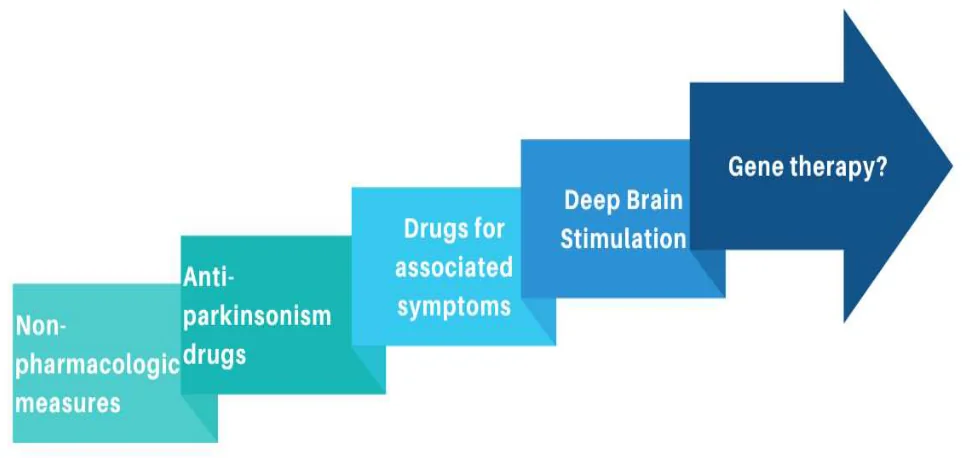
While there is no curative treatment, diverse methods exist to control the symptoms: both motor and non-motor. This includes lifestyle changes and medication to deep brain stimulation [16]. Gene therapy is also under consideration and may become a treatment modality in the near future [17, 18].
Using a multidisciplinary approach the various manifestations of the disease can be comprehended and controlled to a degree which enables the patient to lead a normal life fulfilling regular expectations [19].
The following case report is about a geriatric male suffering from Parkinson’s disease, along with other chronic diseases- making it a case of multimorbidity managed by polypharmacy. The patient travelled 400 kilometers in order to seek specialist care for his neurodegenerative disease, and had regularly travelled to centers farther away for the same in the past. There is higher burden of NCDs among the elderly, and neurodegenerative disorders are concentrated within the same age group. Thus, can an NCD clinic even at primary/secondary be equipped to manage these disorders (in this case PD)?
Case Report
A 69-year-old man, married, Hindu by religion, currently not working, presented to a Non-Communicable Disease (NCD) Prevention Clinic in eastern India for routine evaluation. On further probing, he complained of occasional episodes of tingling and numbness in bilateral hands and feet. These episodes were sudden in onset and resolved on their own. They were not associated with pain, and there were no aggravating or relieving factors.
He had been diagnosed with Type 2 Diabetes Mellitus 5 years ago. Following an episode of headache 9 months ago, he was diagnosed with hypertension and Parkinson’s disease. This was followed by multiple visits to tertiary care centres across the country, even with a controlled profile.
The patient has a normal appetite, regular bowel and bladder movements, and gets adequate sleep of about 6-7 hours every night. He has no addictions. He lives with his wife and son and has no immediate relative suffering from an NCD.
On examination: Patient is conscious, cooperative, and well-orientated to time, place, and person.
In appearance, the patient has mask-like facies and slightly stooped posture. He walks with short, shuffling steps, without swinging his arms.
Based on investigations, both hypertension and diabetes mellitus were well-controlled, with adequate renal parameters.
| Time | Medication |
|---|---|
| Before breakfast | Tab Metformin 1000mg + Tab Glimepiride 1 mg Tab Telmisartan 40mg |
| After breakfast | Tab Levodopa 50mg+Tab Carbidopa 5mg |
| After lunch | Tab Levodopa 50mg+Tab Carbidopa 5mg |
| Before dinner | Tab Metformin 1000mg + Tab Glimepiride 1 mg Tab Amlodipine 5mg |
| After dinner | Tab Levodopa 50mg+Tab Carbidopa 5mg |
System problems as per WHO health system building blocks [20]
| Building block | Problem identified |
|---|---|
| Service delivery | Management for PD generally not offered at primary/secondary healthcare level |
| Health workforce | Neurologist shortage and general physicians not trained adequately |
| Health information system | Smooth referral and back-referral not facilitated through information systems; variable availability of digital documents |
| Access to essential medicines | Drugs for PD not indented at lower levels |
| Financing | No targeted funding |
Management
Non-pharmacological: A salt-restricted diabetic diet was advised with regular physical activity of 30 minutes a day for 5 days a week.
Pharmacological – The patient was advised to continue the same medication, but instead of the evening dose of Amlodipine, a combination of Telmisartan and Amlodipine (40/5) was advised in the evening, reducing pill burden.
He has been counselled to review routine reports and linked up with the Community Health Centre nearest to his home for the same. He was explained the symptoms of PD and advised to consult a specialist only in case of a breakthrough event.
Discussion
India faces a significant shortage of neurologists, with only one neurologist available for every million people. This abysmal patient-to-doctor ratio complicates the management of chronic neurodegenerative conditions like Parkinson’s disease. However, the primary care setting can effectively handle the ongoing monitoring of medication and the rehabilitative aspects of care, allowing specialists to focus on more complex cases [5].
Despite being elderly and dealing with multiple chronic diseases, this patient travelled about 400 kilometres for specialist care, highlighting the barriers faced by those with neurodegenerative disorders. NCD clinics under the National Programme for Prevention and Control of Non-Communicable Diseases (NP-NCD) have the potential to incorporate geriatric care, including the management of neurodegenerative diseases. Integrated care can help improve access to these services [21].
The training of unspecialised healthcare workers to recognise the signs of PD is recommended by WHO, as is the wide availability of the Levodopa-Carbidopa combination as an essential drug [22]. The National List of Essential Medicines also includes varying strengths of this drug combination, as well as Trihexiphenidyl at primary, secondary, and tertiary levels of healthcare [23]. As of 2017, no countries had reported availability of these drugs at the primary care level in the Southeast Asian region [24].
Early identification of Parkinson’s disease is crucial for effective management. Timely diagnosis allows for early intervention, which can significantly improve the quality of life, even if disease progression may not be modified. Screening in high-risk populations has been suggested to facilitate earlier detection [25].
Regular physical activity has been shown to enhance mobility, balance, and overall quality of life for individuals with Parkinson’s disease. Exercise programmes tailored to the patient’s abilities can help mitigate symptoms and improve functional outcomes [26].
Nutritional strategies can play an important role in managing Parkinson’s symptoms. A balanced diet rich in antioxidants and essential fatty acids can provide neuroprotection and help in managing weight, as patients often experience changes in appetite and metabolism. Tea and caffeine have also been seen to be protective [27].
Occupational therapy focuses on helping patients maintain daily living skills and improve their independence, while speech therapy addresses communication and swallowing difficulties. Both therapies are vital for enhancing quality of life and functional abilities. Physiotherapy is essential for improving mobility, strength, and flexibility in patients with Parkinson’s Disease. Targeted exercises can reduce rigidity and enhance gait, contributing to greater independence [28]. Mental health issues and cognitive decline are more prevalent in these patients, playing a role in the deteriorated quality of life [29]. Depression worsens the patient’s condition further [30]. They also have higher levels of anxiety disorders [31]. Thus, the primary care physician must keep an eye on symptoms of mental disorder. The patient should be introduced to the Tele MANAS platform, where trained counsellors and specialists, if needed, can attend to them [32]. Music therapy is still under exploration for the cognitive and emotional benefits it can yield in these patients [33].
Strategies under the National Programme for Healthcare of Elderly (NPHCE) include home visits by trained health workers for the promotion of desirable lifestyle practices like a balanced diet, physical exercise, and avoiding smoking and alcohol. Adequately implemented, this will positively affect these patients, most of whom are part of the target age group for this programme [34].
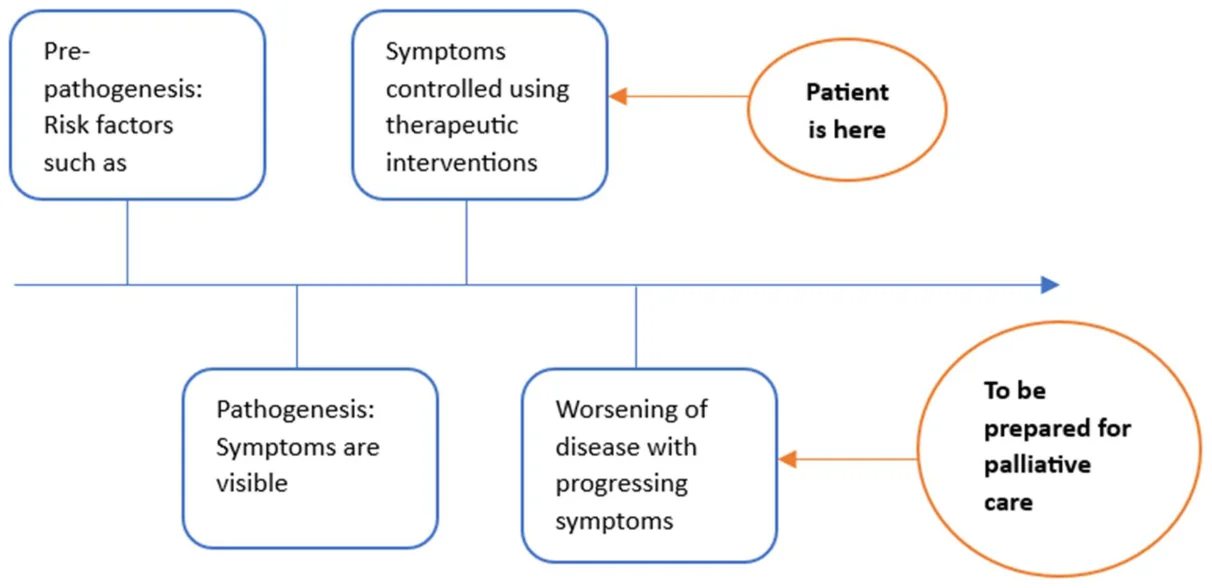
Palliative care aims to improve the quality of life for patients by managing symptoms and providing psychosocial support. This can significantly enhance their overall well-being, not just in the end stage but any stage of the disease, considering its nature requires palliation [35].
Given that PD can have an uneventful course with regular monitoring, requiring only occasional specialist consultation, the emergent hero is telemedicine. Remote neurological help can make the process easier for patients by cutting down on out of pocket expenditure and the need for frequently partaking in domestic medical tourism [36, 37]. The National Telemedicine Service, eSanjeevani, can prove useful in this regard. The patient can directly access consultation through eSanjeevaniOPD by using their phone [38]. There is also provision for consultation from Health and Wellness Centres, both at the sub-centre and primary health centres under eSanjeevaniAB-HWC. The worker at a sub-centre can reach an MBBS doctor or even a specialist, while the generalist at a PHC has the opportunity to telephonically approach a specialist [39]. This also ensures that the channels of patient care are integrated and don’t operate in isolation.
We have attempted to encapsulate a primary care package for PD in the following acronym:
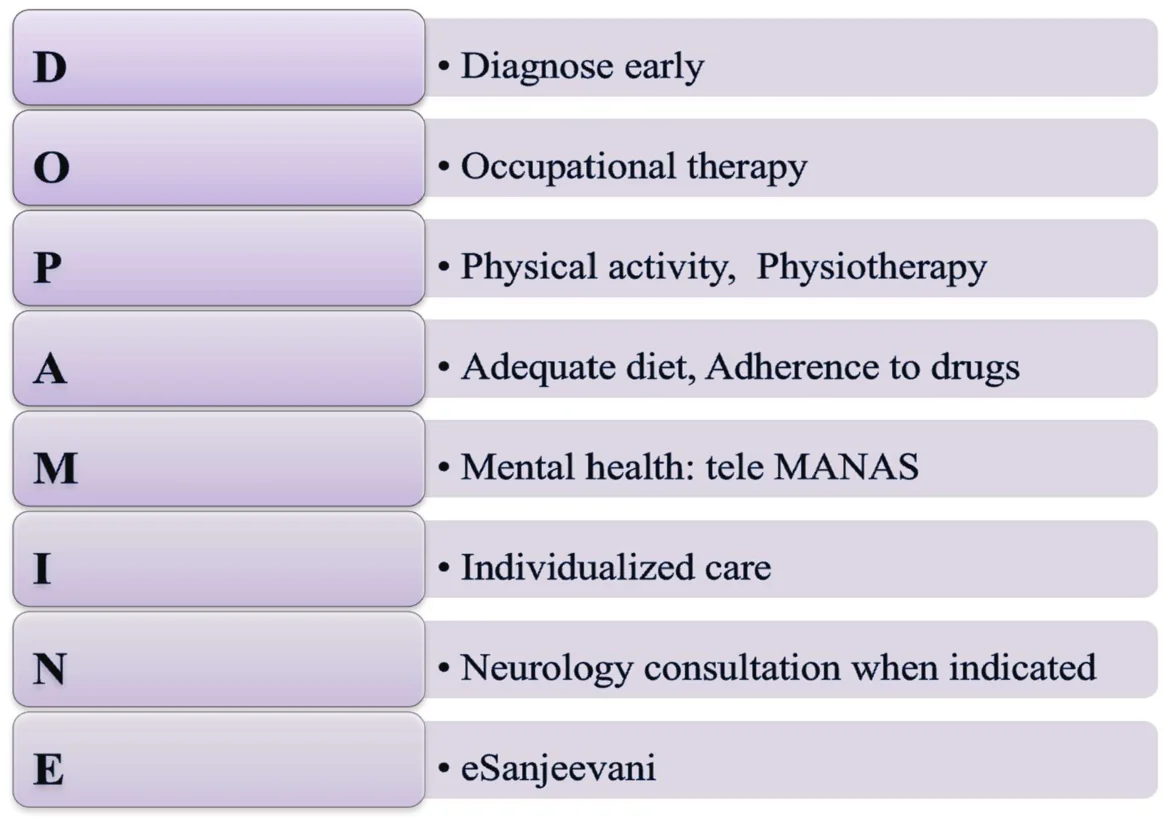
The case of this elderly patient demonstrates the necessity for integrated care that accommodates multimorbidity and focuses on early detection and comprehensive management strategies. Adopting a holistic approach that includes both pharmacological and non-pharmacological approaches will not only improve the quality of life for individuals living with Parkinson’s but also lead to the healthcare system gaining capacity to manage it.
Conflicts of Interest
None.
References
- De Lau LM, Breteler MM. Epidemiology of Parkinson’s disease. The Lancet Neurology. 2006 Jun 1;5(6):525–35. [doi:10.1016/s1474-4422(06)70471-9]
- Parkinson disease [Internet]. [cited 2024 Oct 28]. Available from: https://www.who.int/news-room/fact-sheets/detail/parkinson-disease
- Dhiman V, Menon GR, Kaur S, Mishra A, John D, Rao Vishnu MV, et al. A Systematic Review and Meta-analysis of Prevalence of Epilepsy, Dementia, Headache, and Parkinson Disease in India. Neurol India. 2021;69(2):294–301. [doi:10.4103/0028-3886.314588]
- Modak A, Raju B, Jumah F, Pain M, Gupta G, Nanda A. A modern history of neurosurgery and neurology in India: lessons for the world. 2022 Sep 23 [cited 2024 Sep 24]; Available from: https://thejns.org/view/journals/j-neurosurg/138/5/article-p1467.xml
- The Future of Neurology in India [Internet]. [cited 2024 Sep 24]. Available from: https://worldneurologyonline.com/article/the-future-of-neurology-in-india/
- Morris HR, Spillantini MG, Sue CM, Williams-Gray CH. The pathogenesis of Parkinson’s disease. The Lancet. 2024 Jan 20;403(10423):293–304. [doi:10.1016/s0140-6736(23)01478-2]
- Bellou V, Belbasis L, Tzoulaki I, Evangelou E, Ioannidis JPA. Environmental risk factors and Parkinson’s disease: An umbrella review of meta-analyses. Parkinsonism Relat Disord. 2016 Feb;23:1–9. [doi:10.1016/j.parkreldis.2015.12.008]
- Komici K, Femminella GD, Bencivenga L, Rengo G, Pagano G. Diabetes Mellitus and Parkinson’s Disease: A Systematic Review and Meta-Analyses. J Parkinsons Dis. 2021;11(4):1585–96. [doi:10.3233/jpd-212725]
- Bantounou MA, Shoaib K, Mazzoleni A, Modalavalasa H, Kumar N, Philip S. The association between type 2 diabetes mellitus and Parkinson’s disease; a systematic review and meta-analysis. Brain Disorders. 2024 Sep 1;15:100158. [doi:10.1016/j.dscb.2024.100158]
- Chen J, Zhang C, Wu Y, Zhang D. Association between Hypertension and the Risk of Parkinson’s Disease: A Meta-Analysis of Analytical Studies. Neuroepidemiology. 2019;52(3–4):181–92. [doi:10.1159/000496977]
- Jankovic J. Parkinson’s disease: clinical features and diagnosis. Journal of Neurology, Neurosurgery & Psychiatry. 2008 Apr 1;79(4):368–76. [doi:10.1136/jnnp.2007.131045]
- Zesiewicz TA, Baker MJ, Wahba M, Hauser RA. Autonomic nervous system dysfunction in Parkinson’s disease. Curr Treat Options Neurol. 2003 Apr;5(2):149–60. [doi:10.1007/s11940-003-0005-0]
- De Cock VC, Vidailhet M, Arnulf I. Sleep disturbances in patients with parkinsonism. Nat Rev Neurol. 2008 May;4(5):254–66. [doi:10.1038/ncpneuro0775]
- Grover S, Somaiya M, Kumar S, Avasthi A. Psychiatric aspects of Parkinson’s disease. J Neurosci Rural Pract. 2015;6(1):65–76. [doi:10.4103/0976-3147.143197]
- Kobylecki C. Update on the diagnosis and management of Parkinson’s disease. Clin Med (Lond). 2020 Jul;20(4):393–8. [doi:10.7861/clinmed.2020-0220]
- Parkinson’s disease in adults: diagnosis and management [Internet]. London: National Institute for Health and Care Excellence (NICE); 2017 [cited 2024 Sep 29]. (National Institute for Health and Care Excellence: Guidelines). Available from: http://www.ncbi.nlm.nih.gov/books/NBK447153/
- Dumbhare O, Gaurkar SS. A Review of Genetic and Gene Therapy for Parkinson’s Disease. Cureus. 15(2):e34657. [doi:10.7759/cureus.34657]
- Axelsen TM, Woldbye DPD. Gene Therapy for Parkinson’s Disease, An Update. J Parkinsons Dis. 8(2):195–215. [doi:10.3233/jpd-181331]
- Weise D, Claus I, Dresel C, Kalbe E, Liepelt-Scarfone I, Lorenzl S, et al. Multidisciplinary care in Parkinson’s disease. Journal of Neural Transmission. 2024 Jul 23;131(10):1217. [doi:10.1007/s00702-024-02807-w]
- Everybody’s business : strengthening health systems to improve health outcomes : WHO’s framework for action. World Health Organization, 2007. [Google Scholar]
- Venugopal V, Richa R, Singh D, Gautam A, Jahnavi G. National Programme for Prevention and Control of Cancer, Diabetes, Cardiovascular Diseases, and Stroke: A Scoping Review in the Context of Hypertension Prevention and Control in India. Indian Journal of Public Health. 2023;67(Suppl 1):S50. [doi:10.4103/ijph.ijph_681_23]
- Parkinson disease: a public health approach. Technical brief. Geneva: World Health Organization; 2022. Licence: CC BY-NC-SA 3.0 IGO. [Google Scholar]
- Essential Medicines [Internet]. [cited 2024 Oct 21]. Available from: https://cdsco.gov.in/opencms/opencms/en/consumer/Essential-Medicines/
- Organization WH. Atlas: country resources for neurological disorders [Internet]. World Health Organization; 2017 [cited 2024 Oct 25]. Available from: https://iris.who.int/handle/10665/258947
- Fernando L. Pagan MD. Improving Outcomes Through Early Diagnosis of Parkinson’s Disease. 2012 Sep 22 [cited 2024 Sep 30];18. Available from: https://www.ajmc.com/view/a408_12sep_pagan_s176to182
- Ernst M, Folkerts AK, Gollan R, Lieker E, Caro-Valenzuela J, Adams A, et al. Physical exercise for people with Parkinson’s disease: a systematic review and network meta-analysis. Cochrane Database Syst Rev. 2023 Jan 5;1(1):CD013856. [doi:10.1002/14651858.cd013856.pub2]
- Barbaresko J, Lellmann AW, Schmidt A, Lehmann A, Amini AM, Egert S, et al. Dietary Factors and Neurodegenerative Disorders: An Umbrella Review of Meta-Analyses of Prospective Studies. Advances in Nutrition. 2020 Sep 1;11(5):1161–73. [doi:10.1093/advances/nmaa053]
- Rafferty MR, Nettnin E, Goldman JG, MacDonald J. Frameworks for Parkinson’s Disease Rehabilitation Addressing When, What, and How. Curr Neurol Neurosci Rep. 2021 Feb 22;21(3):12. [doi:10.1007/s11910-021-01096-0]
- Quality of life in Parkinson’s disease: A systematic review and meta-analysis of comparative studies - PubMed [Internet]. [cited 2024 Oct 28]. Available from: https://pubmed.ncbi.nlm.nih.gov/33372386/
- Aarsland D, Påhlhagen S, Ballard CG, Ehrt U, Svenningsson P. Depression in Parkinson disease—epidemiology, mechanisms and management. Nat Rev Neurol. 2012 Jan;8(1):35–47. [Google Scholar]
- Gibson JS, Flanigan JL, Patrie JT, Dalrymple WA, Harrison MB. Predictors of anxiety in Parkinson’s disease: results from a 3-year longitudinal cohort study. Neurological Sciences. 2022 Oct 11;44(2):547. [doi:10.1007/s10072-022-06427-8]
- Operational Guidelines - Tele Manas.pdf [Internet]. [cited 2024 Oct 28]. Available from: https://mohfw.gov.in/sites/default/files/Operational%20Guidelines%20-%20Tele%20Manas.pdf
- Music Therapy and Parkinson’s Disease: A Systematic Review from 2015–2020 - PMC [Internet]. [cited 2024 Sep 24]. Available from: https://www.ncbi.nlm.nih.gov/pmc/articles/PMC8582661/
- National Programme for healthcare of Elderly(NPHCE) :: National Health Mission [Internet]. [cited 2024 Oct 25]. Available from: https://nhm.gov.in/index1.php?lang=1&level=2&sublinkid=1046&lid=605
- Hvisdak V, Huang AP, Kluger BM. Palliative Care of End Stage Parkinsonism: An Overview Including the Five Pillars Framework. Mov Disord Clin Pract. 2022 Nov 30;10(Suppl 2):S63–7. [doi:10.1002/mdc3.13620]
- Mehndiratta MM, Aggarwal V. Neurological disorders in India: past, present, and next steps. The Lancet Global Health. 2021 Aug 1;9(8):e1043–4. [doi:10.1016/s2214-109x(21)00214-x]
- Radder DLM, De Vries NM, Riksen NP, Diamond SJ, Gross D, Gold DR, et al. Multidisciplinary care for people with Parkinson’s disease: the new kids on the block! Expert Review of Neurotherapeutics. 2019 Feb 1;19(2):145–57. [doi:10.1080/14737175.2019.1561285]
- eSanjeevani [Internet]. [cited 2024 Oct 25]. Available from: https://esanjeevani.mohfw.gov.in/#/
- Guidelines_for_Telemedicine Services.pdf [Internet]. [cited 2024 Oct 25]. Available from: https://esanjeevani.mohfw.gov.in/assets/guidelines/Guidelines_for_Telemedicine_Services.pdf
Published
Article metrics
- Views
- 343
- Downloads
- 293
Based on this site's usage statistics.
Issue
Section
How to Cite
More in this topic: NCDs & mental health
View Point · 2025
From Screens to Sips: Social Media's Impact on Adolescent Alcohol Use