Editorial Vol. 8 No. 1 (2024): International J Health Systems and Implementation Research
Importance of GHG Accounting: A Public Health Imperative in Climate Action
GHG Accounting for Public Health
Downloads
Topics
Keywords:
- Carbon Neutrality, Climate Change, Green House Gas, Multiscope GHG accounting, Public Health
Abstract
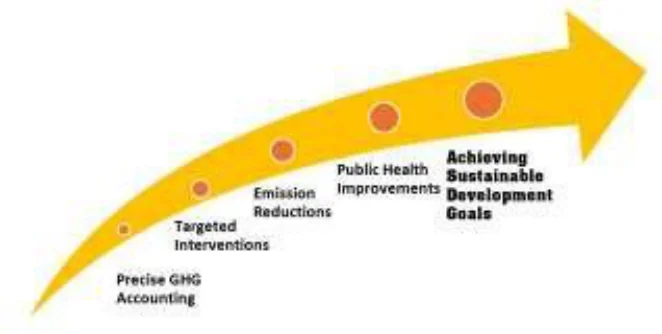
‘Green House Gas (GHG) Accounting’, utilizing greenhouse gas protocols, is crucial in addressing the current pressing issue of climate change and its cascading impact on public health. This current editorial highlights the critical role of precise GHG accounting in identifying major sources of emission and how implementing targeted interventions and reduction in GHG emission can lead to significant public health benefits, including significant decrease in respiratory and cardiovascular diseases, demonstrating the importance of integrating data of GHG emissions and public health policies.
Full text
This web version was prepared from the published PDF, which is the version of record. Please cite and quote from the PDF.
Introduction
Meteorologists and climate experts have time and again warned of impending heat waves of previously unprecedented length and intensity just before the start of summer 2024. These forecasts, fuelled by inexorable progress of climate change, cast anguish over communities everywhere. These heat waves highlight a grim truth, which goes beyond the pain of extreme heat i.e. The world stands at a critical juncture where the intertwined challenges of climate change and public health demand urgent attention and concerted action [6]. Given the looming catastrophe of greenhouse gas emissions and climate change, ‘Green House Gas (GHG) Accounting’ becomes more than simply a theoretical endeavour, rather it becomes an essential necessity for preserving public health.
In this editorial, we have highlighted the pivotal role of ‘GHG Accounting’, utilizing greenhouse gas protocols, in addressing this pressing issue and harnessing its potential for the benefits of public health [5,7].
Understanding ‘GHG Accounting’
‘GHG Accounting’ serves as the cornerstone for quantifying and tracking the activities causing emissions of gases such as carbon dioxide (CO2), methane (CH4), nitrous oxide (N2O) etc, that contribute to global warming. The greenhouse gas protocols, established frameworks for conducting such accounting, offer standardized methodologies for organizations to measure, report, and manage their emissions. By adopting these protocols, entities ranging from corporations to governments can gain insights into their carbon footprint and identify opportunities for reduction of GHG emissions [5].
How Does It Work?
The GHG Protocol is a global standard for accounting greenhouse gas emissions, providing a structured approach for quantification, disclosure and validation. It categorizes emissions into three groups: primary emissions from organization facilities (Scope1), secondary emissions from externally sourced electricity (Scope 2) and emissions from supply chain activities (Scope 3) Figure 1. The protocol is also based ona few guidelines for GHG accounting: significance, comprehensiveness, uniformity, openness and precision, ensuring the credibility, reliability, and utility of the GHG accounting in decision-making [4,5].

The Nexus with Public Health
The intersection between greenhouse gas emissions and public health is profound and multifaceted. From air pollution and heat-related illnesses to food and water insecurity, the impacts of climate change on human health are pervasive. ‘GHG Accounting’ plays a pivotal role in elucidating these linkages, providing invaluable data for understanding the health risks posed by emissions-intensive activities and informing strategies to mitigate them.
Benefits of Accurate Green House Gas Accounting:
a). Health Co-benefits
One of the most compelling aspects of ‘GHG Accounting’ is its ability to uncover health co-benefits associated with emissions reduction measures. For instance, policies aimed at promoting clean energy sources not only mitigate climate change but also reduce air pollution, thereby alleviating respiratory ailments and improving overall air quality. By quantifying these co-benefits, ‘GHG Accounting’ strengthens the case for adopting sustainable practices that yield dividends for both the environment and public health. For instance, A study featured in Environmental International in 2018, revealed 20% reduction in NO2 concentration in Copenhagen Municipality caused 6.1% Asthma prevalence reduction for men and 6.6% in women. In addition to it, 15.9% COPD prevalence reduction was observed for men and 12.3% reduction in females. Although the study does not explicitly discuss the decrease in greenhouse gas (GHG) emissions, it implies that strategies and policies focused on mitigating air pollution from traffic, such as decreasing exposure to NO2 through initiatives like environmental zones, road pricing or encouraging the use of public and active transportation, may result in improvement in public health [1].
Therefore, it is anticipated that Copenhagen’s goal to achieve carbon neutrality by the year 2025 through the utilization of ‘GHG Accounting’ methods to mitigate emissions stemming from various sectors such as transportation, heating, and industrial activities will reduce the climate change- related public health issues [3]. The collection of data and implementation of interventions play a crucial role in this endeavour. One such intervention includes the promotion of cycling and the establishment of an extensive network of bike lanes, both of which have led to a substantial decrease in emissions. Another key initiative involves the efficient utilization of waste heat from power plants alongside the integration of renewable energy sources. Moreover, efforts to enhance public health have been made, particularly in terms of respiratory health [2].
b). Promoting Sustainable Practices
At its core, ‘GHG Accounting’ serves as a catalyst for promoting sustainable practices across sectors. The transportation, energy, agriculture, or healthcare organizations, can leverage emissions data to drive innovation, optimize resource use and reduce their environmental footprint. In the realm of public health, healthcare facilities are increasingly embracing sustainability initiatives that not only reduce emissions but also enhance patient care and staff well-being. By integrating ‘GHG Accounting’ into sustainability efforts, these organizations demonstrate their commitment to advancing both environmental stewardship and public health [1].
The illustration of Rajkot city in Gujarat, exemplifies how different GHG accounting initiatives on a global or national scale play a significant role promote sustainable practices and help in mitigating carbon emissions. Rajkot as a member of the C40 Cities network, established a target to decrease its carbon emissions by 14% by 2016, based on levels from 2011. It was among the pioneering cities to adopt the Global Protocol for Community- Scale Greenhouse Gas Emission Inventories (GPC), facilitating strategic planning and execution of measures to attain this reduction objective. The criterion for the selection of Rajkot city as a study area was based on its effective utilization of solar power, aiming to enhance the environmental sustainability of the municipal corporation. Two of the three Rajkot municipal offices operate on solar energy, with a majority of streetlights replaced by energy-efficient LED fixtures, and all local parks illuminated by solar-powered lights. Furthermore, there is an emphasis on promoting the installation of solar water heaters in high-rise residential buildings, coupled with a one-time tax rebate incentive [8].
c). Education and Advocacy
The importance of ‘GHG Accounting’ is quite notable in the domain of education and advocacy. Through the dissemination of knowledge regarding the health ramifications of greenhouse gas emissions and climate change, various stakeholders have the capacity to mobilize backing for measures and strategies that prioritize public health and environmental sustainability. Whether at the grassroots level or in the domain of high-level policy formulation, well-informed discussions guided by data on ‘GHG Accounting’ are essential for catalyzing significant transformations and fostering a climate-resilient culture and equitable health outcomes [1]. One such example is the Securities and Exchange Board of India (SEBI) In July 2023, which incorporated additional environmental, social, and governance (ESG) parameters for obligatory disclosure within the framework of the ‘Business Responsibility and Sustainability Report (BRSR) Core’ applicable to select publicly traded firms in India. The BRSR template was originally unveiled in May 2021, supplanting the erstwhile Business Responsibility Report (BRR). BRSR necessitates comprehensive disclosure concerning environmental, social, and governance (ESG) criteria, encompassing precise measurements of GHG emissions (Scope 1, Scope 2, and potentially Scope 3 emissions), objectives for reducing emissions, and strategies for managing climate risks [9].
Conclusion
To sum up, ‘GHG Accounting’ stands as a keystone in the global endeavour to combat climate change and protect public health. We can measure emissions, pinpoint health benefits, evaluate the effects of climate change, encourage sustainable behaviours, educate and advocate for regulations that put the welfare of the community and the environment first by using the power of greenhouse gas protocols. Let us take advantage of the chance to use ‘GHG Accounting’ as a tool for constructive change and group action to address the twin crises of climate and public health. It is essential to the well-being of our world and all its inhabitants.
References
- Brønnum-Hansen H, Bender AM, Andersen ZJ, Sørensen J, Bønløkke JH, Boshuizen H et al. Assessment of impact of traffic-related air pollution on morbidity and mortality in Copenhagen Municipality and the health gain of reduced exposure. Environment International. 2018 Dec 1;121(Part 1):973-980. doi: 10.1016/j.envint.2018.09.050
- Mathiesen, B. V., Auken, I. M. M, Skibsted, J. M. (2019). This is how Copenhagen plans to go carbon-neutral by 2025. https://www.weforum.org/agenda/2019/05/the-copenhagen-effect-how-europe-can-become-heat-efficient/
- Plan CC. Copenhagen Carbon Neutral by 2025. City of Copenhagen. 2011 Jun. [Google Scholar]
- United States Environmental Protection Agency. Scope 1 and Scope 2 Inventory Guidance. Washington, DC. Available at www.epa.gov/climateleadership/scope-1-and-scope-2-inventory-guidance
- World Resources Institute. The greenhouse gas protocol. A corporate accounting and reporting standard, Rev. ed. Washington, DC, Conches-Geneva. 2004. [Google Scholar]
- Witze A. Earth boiled in 2023-will it happen again in 2024? Nature. 2024 Jan;625(7996):637-9. [Google Scholar]
- World Resources Institute. Launch of First Global Standard to Measure Greenhouse Gas Emissions from Cities. Washington, DC. 1998. Available at www.wri.org/initiatives/greenhouse-gas-protocol
- World Resources Institute. Launch of First Global Standard to Measure Greenhouse Gas Emissions from Cities. Washington, DC. 2014. Available at https://www.wri.org/news/release-launch-first-global-standard-measure-greenhouse-gas-emissions-cities
- Cyrill M. India’s Updated Sustainability Reporting Format and Rules for ESG Ratings Providers India Briefing. 2023 July 25. Available at https://www.india-briefing.com/news/india-brsr-core-esg-rating-provider-regulation-29062.html/

Published
Article metrics
- Views
- 707
- Downloads
- 370
Based on this site's usage statistics.