Case Studies Vol. 2 No. 1 (2018): International J Health Systems and Implementation Research
Improving Access to Mental Health Care Services at Village Kheri, Haryana: A Step towards Universal Health Coverage
Downloads
Topics
Keywords:
- Mental Health
- Community Psychiatry
- Universal Health Care Coverage
Abstract
To achieve Universal Health Care Coverage, there is need to include more and more services and reach out to more people without financial catastrophe. Inclusion of community mental health care service at primary health care level is a big challenge. Mental health problems are increasing and the access to mental care services is restricted to urban areas. Department of Psychiatry of this institute had initiated a weekly mental health clinic at CHC Raipur Rani. Our village health post is about 2 Kilometres from this CHC. Community Mental health services were started at rural health post Kheri also in an attempt to improve the access to mental health services. Patients were screened in the village and the cases were referred to CHC Raipur Rani. However, patients did not go to CHC, for this problem, due to various operational reasons. We facilitated the process, fixed up appointments with Psychiatrist at Raipur Rania and provided the available transport to take patients to Raipur Rani and bring them back. This resulted in 26 patients having examined, and 4 new patients have been put on treatment. Medicines are being made available from CHC.
Full text
This web version was prepared from the published PDF, which is the version of record. Please cite and quote from the PDF.
Introduction
Mental disorders include: depression, bipolar affective disorder, schizophrenia and other psychoses, dementia, intellectual disabilities and developmental disorders including autism. Globally, an estimated 300 million people are affected by depression. More women are affected than men. Bipolar disorder affects about 60 million people worldwide. It typically consists of both manic and depressive episodes separated by periods of normal mood. Schizophrenia is a severe mental disorder, affecting about 23 million people worldwide. Globally approximately 50 million people have dementia.[1] Previous research show that one third of the chronic mentally ill in the community remain untreated. There is need to reach the untreated given the gaps in the mental health care facilities in India.[2–5]
As per Universal Health Coverage, there is need to improve the availability and access to more health care services, to wider population with equity and quality and in a way that protects them from financial hardship while availing the services. This requires a strong, efficient, well-run health system. Mental illness has long been a stigma in the Indian community despite continued efforts, and is still perceived as disease of disgrace. Currently, with lifestyle changes, changing demographic transition, mental health services is the requirement of both the young as well as the elderly. Mental health care needs to be incorporated in the health care system to achieve Universal health coverage.[6] In this case study we describe the experience of initiating mental health care service at a village based health post.
2. Case Study
The Community Health Post at a village Kheri is the rural health post and field practice area of Department of Community Medicine, PGIMER, Chandigarh. Village Kheri is located in the block Raipur Rani, District Panchkula, Haryana with a population of nearly 1600. The distance between village Kheri and Community Health Centre, Raipur Rani is about 3.5 km with well connected road and transport facilities.
3. The Context
At the clinic of Village Kheri, many patients were complaining of insomnia, anhedonia and anorexia. The patients attending the clinic were screened for mental illnesses using various relevant questionnaires and symptomatology by doctors of Department of Community Medicine, PGIMER Chandigarh. It was estimated that nearly one third of the patients were in need of psychiatric consultation. As at Community Health Center, Raipur Rani Psychiatrists from Department of Psychiatry, PGIMER Chandigarh were visiting once a week, hence, it was thought to link Rural Health Post Kheri with CHC Raipur Rani for mental health care.
4. The Process
Meetings were held with the villagers, community leaders, the community physician and health worker. Issues regarding community mental illnesses were emphasized upon and their support was sought in generating awareness among the people. With this, general awareness regarding the community mental health services was enhanced. The patients coming to the OPD with suspected mental illnesses were counseled to avail the psychiatry services at CHC Raipur Rani. However, patients did not go to CHC due to various operational reasons.
5. The Problems
There was awareness amongst the patients about the importance of mental health and symptoms of mental illness. However, there was a felt need for providing reassurance that these conditions are preventable and manageable. Despite awareness about the provision of services, there was lack of will and awareness towards the necessity of seeking care for mental health services. Lack of insight of patients to recognize if any symptoms arise; lack of adequate transport and unwillingness to spend time for their own health; belief in superstition all contributed to the reluctance to go CHC. The younger generation neglect towards the elderly care was also observed. This resulted in primarily their inability to go by themselves. This was compounded by lack of confidence on the health care services at CHC
6. The Solution
The idea was to provide the people with access to the health services which will not only be helpful in timely diagnosis but also completing the regular follow ups.
We made effective use of the available vehicle. With the help of a vehicle, it was made possible that the people who had been screened for various mental health and willing to go to CHC, could reach to avail the health service. The psychiatrist coming to the CHC were informed prior to the start of the vehicle about the number of patients. The psychiatrist doctor was asked upon the need of attendant to accompany the patient.
At the start of the service, 10 patients were sent for consultation. The average time to reach the CHC was 10 minutes. There was a need of a new registration slip as to write down long history and prescription. The average time taken by the psychiatrist was 10-15 minutes. Majority of the patients were elderly, hypertensive or diabetics, therefore there was an increased need for electrolyte administration before the start of medications. Hence, there was a need to start electrolytes at the CHC. As the psychiatry services were already in place at the CHC, the medications were already available.
The team of psychiatrists felt that managing the old patients and the new patients sent through community were difficult to manage within the limited constrained time. The patients also felt distressed due to the excess wait time. The first patient had to wait for more than 2 hrs for the return to village if they were to use the same vehicle, as they could not move till the last patient is examined.
At the next OPD visit at the Village Kheri, patients reported relief from the symptoms which were appreciated and medicines given by the doctors were found to be effective. The patients also appreciated the free provision of the transport facility from the village to the CHC despite the long wait time. For patients, the need of electrolytes was discussed and was made available at the CHC.
For the purpose of sustainability, keeping time constraints in mind, a maximum of 4 patients were sent per visit subsequently, to sustain it on a regular basis. The availability of the medicines still remained a gap as the few medicines were not available at CHC and it increased the out of pocket expenditure.
The community mental health services are continued in Rural Health Post Kheri and provide benefit to 26 patients including the elderly and the young with mental illnesses.
7. Discussion
To make Universal Health Coverage a reality, it is of utmost importance that mental health care services are provided at primary care level. It was found that time and will to go to psychiatrist at CHC, were major limiting factors to seek mental health services. Mental health illness patient need “continuum of care,” where they would receive a combination of treatment and services to help them move through the stages of early identification, treatment, recovery and follow-up.[7]
A study conducted in Raipur Rani had found that despite trainings by health workers the people were reluctant to take on the care of mentally ill persons because of time constraints in the clinics, fear of the patients, claims that people did not want the treatments, and the belief that traditional methods of treatment were good enough.[8]
People living with mental illness may need to be taken to or from a hospital or mental health service. According to the person and circumstances the choice of transport can vary and should use the least restrictive option possible.[9] As in this case report, to start community mental services, may require a transport service for people who have trouble accessing regular public transport. This may help build the trust in the government system.
In some countries, volunteers have been sent in community transport to provide ongoing support and supervision. Such services do not aim to act as or to replace a taxi or bus service, but to provide a service to people who are unable to afford, or access, other means of public transport, or need extra assistance.[10]
This case study demonstrates the behaviour change which can be explained with Andersen and Newman Model.[11–14] (Figure I). As per this model three sets of factors can influence health care seeking behavior: Predisposing factors, need factors and enabling factors. This study had explored the predictors that affect the health services utilization.
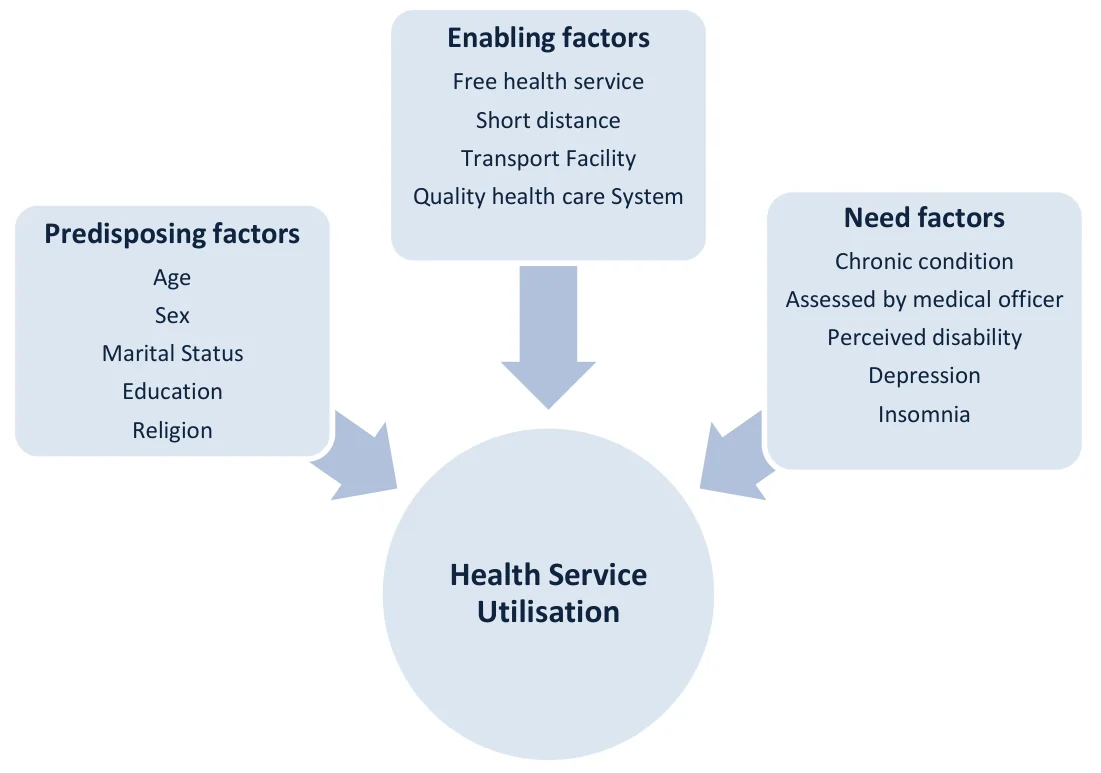
This case study showed that despite the occurrence of the need, and awareness about free service at 3.5 kilometres with abundance of public and private transport facilities available, still patients were not able to avail the services due to many predisposing factors. Due to their age and lack of family support, they were not able to avail the service of their own. By creating enabling environment in terms of fixing up appointment with consulting doctor, and sending them in a vehicle with attendant, with assurance that these patients were examined on priority and dignity, health seeking behaviour changed and it resulted in lot of patient satisfaction.
Mental health disorders pose several service and financial access challenges. The mental illnesses are subjected to stigmatization, discrimination and ignorance, reducing the need and urge to seek care.
Typically, mental disorders are chronic and require regular follow up. Without insurance coverage, psychiatric patients and their families face a financial hardship; choice: pay out-of-pocket (OOP) for treatment by private providers of variable and sometimes poor quality—often by cutting other household spending and investment, or by liquidating assets or savings—or go without treatment altogether.[15]
Mental disorders pose a direct threat to toward healthy living and household budget. In India, the National Sample Survey Organization, national OOP expenditures for treatment of psychiatric disorders amounted to nearly Rs 7 billion, and 40 percent drawn from household income or savings.[16] In Goa, it was found that 15 percent of women spent more than 10 percent of household income on health-related care.[17] The addition of mental health services to the system is an essential need of the coming era. As the lifestyle of people are changing, heath system has to address the gaps in the system to reach the untreated and move towards Universal Health Coverage.
This success was possible due to availability of community psychiatrist and short distance from village health post. To replicate it on wider scale, it is possible to post a community psychiatrist, once a week at CHC level, and build up referral system with limited appointments from different PHCs. Local health worker or ASHA can accompany the patient. In fact, true role of ASHA was perceived to be of such type, wherein she acts as activist and link between community and health system. In past there have been successful experiences of setting up of Rheumatic Fever/ Rheumatic Heart Disease Control Program in the same area.[18]
8. Conclusion
In order to move towards Universal Health Coverage, this case study demonstrates that merely patient screening and provision of specialist at heath facility will not work. There is need to link the patients to the facility by provision of transport and attendant with appointment. Transport facility do not address only the transport barrier, it induces trust and confidence among the patients who are otherwise depressed and focusing on community mental health despite the presence of psychiatry services, there are constraints in the system that hinder the sustainability of mental health services. To achieve healthy ageing, mental health forms an integral part of geriatric heath that needs to be addressed without hassle to the patients. There are multi-facet challenges such as travel distances, the provision of assistance and the timing constraints and resolution of some issues made this a successful attempt towards universal health coverage. The implementation of community mental health services needs further research to have models that are sustainable keeping the view of the elderly population in the rural areas.
9. Acknowledgments:
We acknowledge the contributions of Dr Abu Bashar, Ex Senior Resident, who first took initiative to screen the patients. We also acknowledge, the contributions of Dr Indira and Dr Devakshi Dua, Senior Residents from Psychiatry Department, PGIMER Chandigarh, for giving appointments to the patients.
References:
- Mental disorders [Internet]. World Health Organization.2018 [cited 14 April 2018]. Available from: http://www.who.int/mediacentre/factsheets/fs396/en/
- Padmavathi R, Rajkumar S, Srinivasan TN: Schizophrenic patients who were never treated-a study in an Indian urban community. Psychol Med 1998, 28(Suppl 5):1113-7[cited 16 April 2018]. Available from: https://www.ncbi.nlm.nih.gov/pubmed/9794018
- Geddes JR, Kendell RE: Schizophrenic subjects with no history of admission to hospitals. Psychol Med 1995, 25:859-68[cited 15 April 2018].Available from: https://www.ncbi.nlm.nih.gov/pubmed/7480464
- Issac M, Kapur RL, Chandrasekhar CR, Parathasarathy R, Prema TP: Management of schizophrenic patients in the community.An experimental report.Indian Journal of psychological Medicine 1981, 4:23 [Google Scholar]
- Thara R, Padmavati, Aynkran JR, John S. Community mental health in India: A rethink. Int J Ment Health Syst. 2008 Jul 14;2(1):11 [cited 15 April 2018].Available from: https://www.ncbi.nlm.nih.gov/pubmed/18625047
- WHO | Questions and Answers on Universal Health Coverage [Internet]. who.int. 2018 [cited 15 May 2018]. Available from: http://www.who.int/healthsystems/topics/financing/uhc_qa/en/
- Mental health services in Greater Minnesota | Center for Rural Policy and Development [Internet]. Center for Rural Policy and Development. 2018 [cited 1 June 2018]. Available from: https://www.ruralmn.org/mental-health-services-in-greater-minnesota/)
- WHO. The effectiveness of mental health services in primary care. Geneva: Mental Health Policy and Service Development, Dept. of Mental Health and Substance Dependence, Noncommunicable Diseases and Mental Health, World Health Organization; 2001. Available from : http://www.who.int/iris/handle/10665/66948
- Transport for people in mental health services [Internet]. Www2.health.vic.gov.au. 2018 [cited 01 April 2018]. Available from: https://www2.health.vic.gov.au/mental-health/mental-health-services/transport-for-people-in-mental-health-services
- Transport C. What we do - Community Transport [Internet]. Unitingcareballarat.com.au. 2018 [cited 10 April 2018]. Available from: http://www.unitingcareballarat.com.au/services/aged-disability-services/community-transport
- Aday LA, Andersen RM. A framework for the study of access to medical care. Health Serv Res 1974;9(3):208- 20. [Google Scholar]
- Aday LA, Andersen RM. Equity to access to medical care: a conceptual and empirical overview. Med Care 1981;19(supplement):4-27. [Google Scholar]
- Andersen RM, Newman JF. Societal and individual determinants of medical care utilization in the United States. Milbank Memorial Fund Quarterly– Health and Society 1973;51(1):95-124. [doi:10.2307/3349613]
- Andersen RM. Revisiting the behavioral model and access to medical care: does it matter? J Health Soc Behav 1995;36(March):1-10. [doi:10.2307/2137284]
- Disease control priorities related to mental, neurological, developmental and substance abuse disorders. Geneva: World Health Organization; 2006. [Google Scholar]
- Mahal A, Karan A, Engelgau M. The Economic Implications of Noncommunicable Disease for India. Washington, DC: World Bank; 2010 [doi:10.1596/13649]
- Patel V, Chisholm D, Kirkwood B, Mabey D. Prioritizing health problems in women in developing countries: comparing the financial burden of reproductive tract infections, anaemia and depressive disorders in a community survey in India. Tropical Medicine and International Health. 2007 Jan ;12(1):130-9 [doi:10.1111/j.1365-3156.2006.01756.x]
- Kumar R, Raizada A, Aggarwal AK, Ganguly NK. A community-based rheumatic fever/rheuma:tic heart disease cohort: twelve-year experience. Indian Heart J. 2002 Jan-Feb;54(1):54-8 Available from: https://www.ncbi.nlm.nih.gov/pubmed/11999089
Published
Article metrics
- Views
- 2,286
- Downloads
- 1,179
Based on this site's usage statistics.
Issue
Section
How to Cite
More in this topic: NCDs & mental health
View Point · 2025
From Screens to Sips: Social Media's Impact on Adolescent Alcohol Use